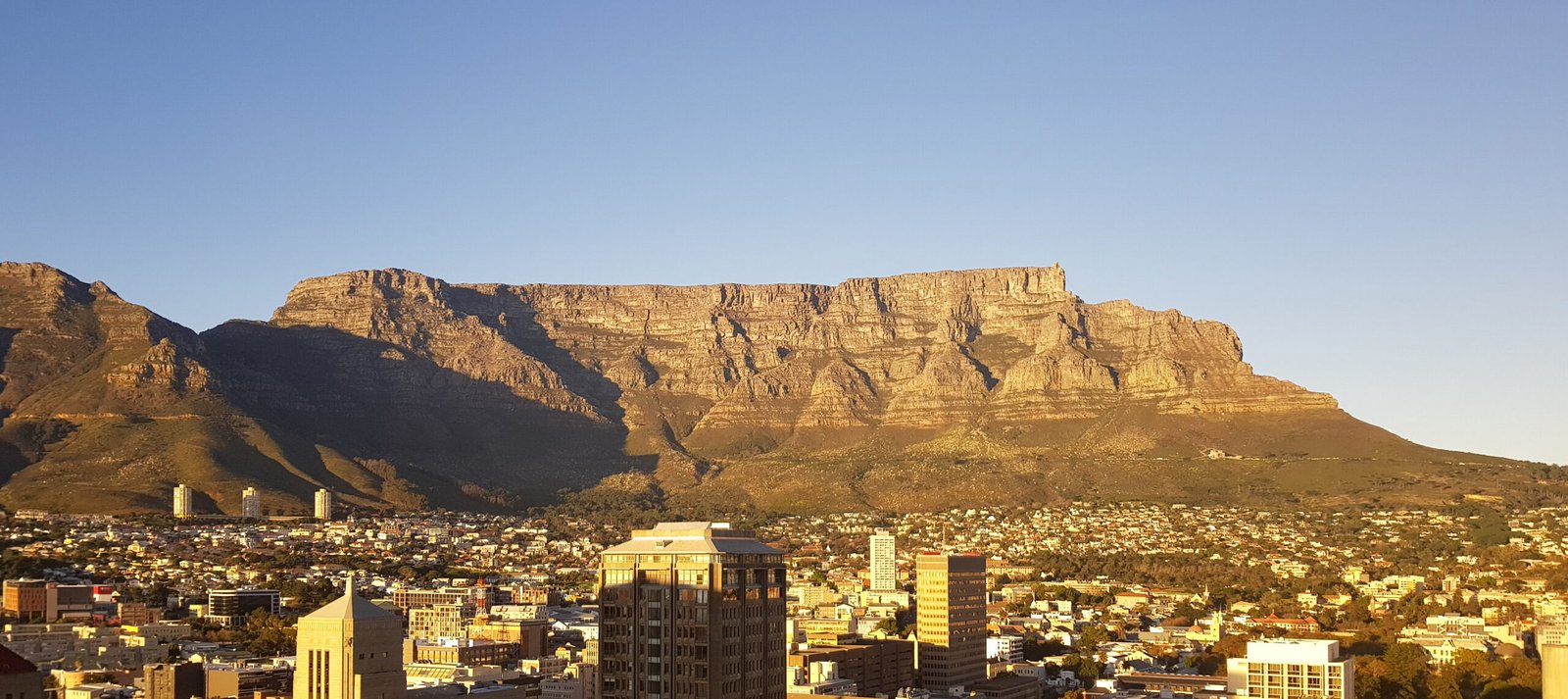
Stand anywhere in Cape Town, and you’ll feel its presence. Looming, ancient, and magnificent, Table Mountain isn’t just a backdrop to the city—it’s the city’s heart and soul. Its iconic, flat-topped silhouette, often draped in a “tablecloth” of clouds, is a world-famous landmark.
This geological wonder is more than just a beautiful postcard image. It is a silent, enduring witness to the breathtakingly complex and layered history of the city that has grown at its feet. The mountain has watched over it all: the flourishing of a unique natural kingdom, the arrival of ambitious colonial powers, the birth of a vibrant and resilient culture, and the long, painful struggle for freedom.
This is the story of Cape Town as the mountain has seen it. It’s a journey through the layers of time, from the ancient flora that clings to its rocky slopes to the colorful houses of Bo-Kaap nestled below, and across the water to the somber legacy of Robben Island. So, let’s explore the stories etched into the landscape of this remarkable city.
The Mountain’s Ancient Kingdom: Nature’s Foundation
Before any ships rounded the cape, before any city was built, the mountain itself was a world unto its own. It was a kingdom of unique plants and resilient animals, shaped by millions of years of geological force and climatic shifts. To understand Cape Town, you must first understand the natural stage upon which its human drama has unfolded.
The Geography of a Peninsula City
Table Mountain’s dramatic form is the result of an immense geological timeline. Composed primarily of incredibly hard quartzitic sandstone, it has withstood over 500 million years of erosion that wore away the softer rock around it, leaving this colossal monument standing proud. Its famous flat top, stretching nearly two miles from end to end, is a testament to this resilience.
On many days, a meteorological phenomenon known as the “tablecloth” occurs, as a southeasterly wind pushes moist air up the mountain’s slopes, causing the moisture to condense into a thick, rolling bank of clouds that spills over the top like a celestial waterfall.
Its position is just as significant as its structure. The mountain dominates the northern end of the Cape Peninsula, a narrow strip of land that juts out into the ocean, marking the point where the cold Atlantic and warmer Indian Oceans meet. For centuries of seafarers navigating the treacherous journey around Africa, Table Mountain was the first and most welcome sign of a safe harbor and fresh water, a natural beacon that guided them to shore.
This geography dictated everything that came after, forcing the city to grow in the narrow basin between the mountain and the sea and shaping the very climate and character of its neighborhoods.
A World of Flowers: The Cape Floral Kingdom
The slopes of Table Mountain are home to one of the planet’s most astonishing biological treasures. It is the heart of the Cape Floral Kingdom, the smallest of the world’s six floral kingdoms but by far the richest in terms of plant diversity. This region, a UNESCO World Heritage Site, packs more plant species per square mile into its area than the entire Amazon rainforest.
The dominant vegetation here is known as “fynbos,” a word from Afrikaans meaning “fine bush.” It’s a unique type of shrubland characterized by tough, hard-leaved plants that have adapted to the nutrient-poor soils and seasonal fires of the region. Fynbos is not just vegetation; it’s a complex ecosystem that relies on fire for regeneration, with many seeds only germinating after being exposed to smoke or heat.
Walking the trails of Table Mountain is like stepping into a botanical garden designed by nature itself. You’ll find thousands of species, many of which grow nowhere else on Earth. The most iconic of these is the magnificent King Protea, a massive, otherworldly flower that is the national symbol of South Africa. Alongside it are countless species of ericas, with their delicate bell-shaped flowers, and restios, the reed-like plants that form the backbone of the fynbos landscape.
More Than Just Plants: Wildlife on the Slopes
While the flora gets most of the attention, a surprising array of wildlife thrives in this fynbos kingdom. The most commonly sighted resident is the Rock Hyrax, affectionately known as the “dassie.” These furry, gopher-like creatures are often seen basking on warm rocks, seemingly unimpressed by the human visitors. But don’t let their modest appearance fool you; their closest living relative, bizarrely, is the elephant.
The mountain is also a sanctuary for more elusive animals like caracals, porcupines, and mongooses. For birdwatchers, it’s a paradise. The powerful Verreaux’s eagle can be seen soaring on the thermals, hunting dassies among the cliffs. Smaller, but no less important, is the Cape sugarbird. With its exceptionally long tail feathers, this bird has co-evolved with the proteas, its curved beak perfectly shaped to drink their nectar, making it a crucial pollinator in this delicate ecosystem.
Echoes of Empire: The Dutch East India Company’s Legacy
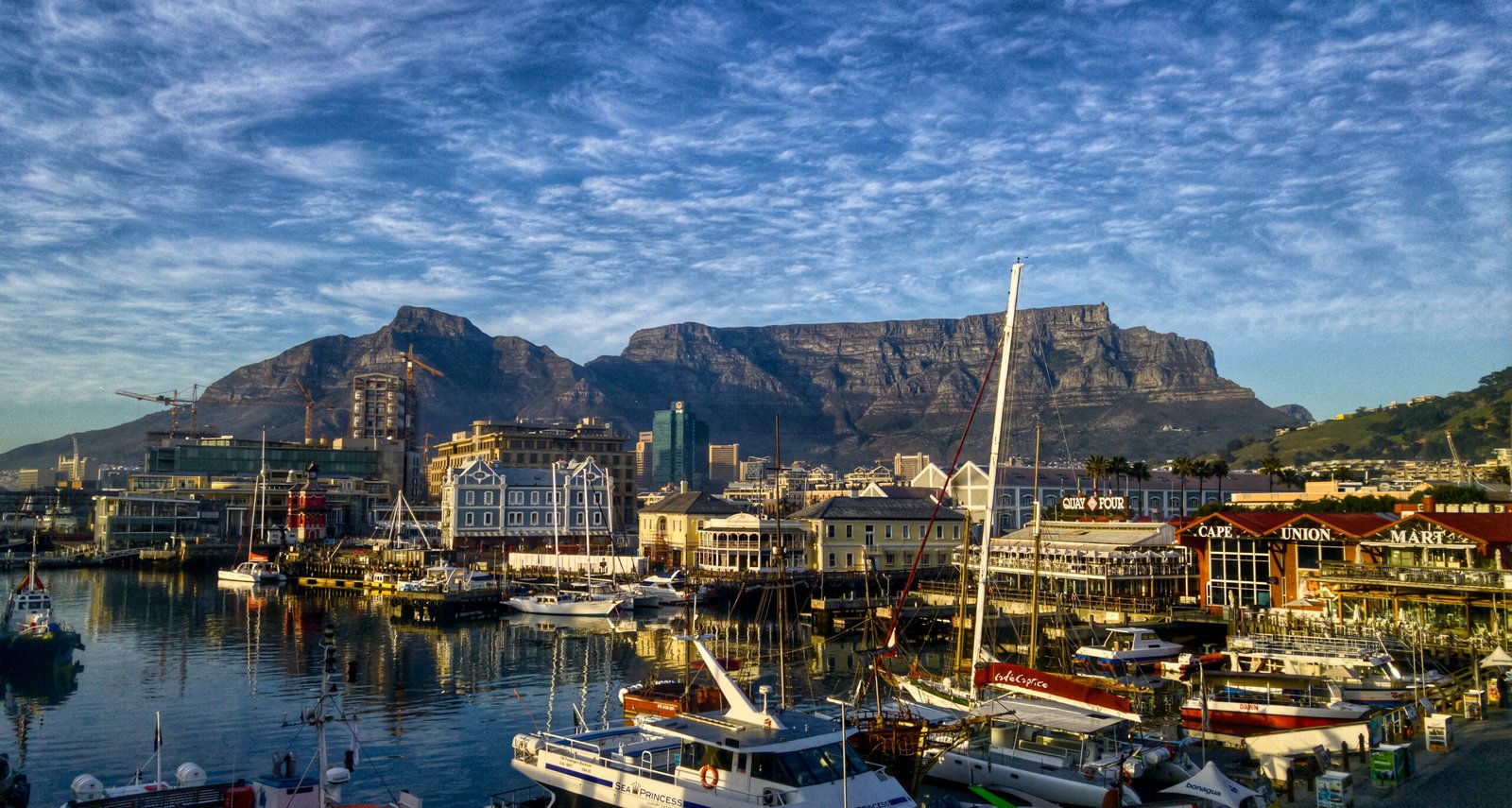
The mountain’s strategic location didn’t go unnoticed, and in the 17th century, its story became entwined with the ambitions of a global superpower. The arrival of European ships marked a turning point, transforming the Cape from a natural paradise into a pivotal cog in the machine of global trade and colonization.
The “Tavern of the Seas”
In 1652, a fleet of ships from the Dutch East India Company (Verenigde Oostindische Compagnie, or VOC), commanded by Jan van Riebeeck, dropped anchor in Table Bay. Their mission was not to establish a sprawling colony but to create a simple refreshment station. The grueling, months-long sea voyage from Europe to the spice-rich markets of Asia was taking a heavy toll on sailors, many of whom died from scurvy. The Cape, with its fertile soil and fresh water, was the perfect halfway point to grow vegetables, raise livestock, and resupply the ships.
This small outpost, initially just a fort and a garden, was dubbed the “Tavern of the Seas.” But what began as a pragmatic logistical stop soon grew. The VOC’s presence became permanent, expanding from the shoreline into the valleys at the foot of the mountain, laying the foundations for the city of Cape Town and forever altering the destiny of the land and its indigenous Khoikhoi people.
A Lasting Imprint: Cape Dutch Architecture
As the settlement grew, a unique architectural style emerged, a blend of Dutch, German, and French Huguenot influences adapted to the African environment. This Cape Dutch architecture is one of the most enduring visual legacies of the colonial era. Its most recognizable features are the grand, ornately curved gables that adorn the front of buildings—a decorative flourish that became a status symbol for wealthy landowners.
These buildings are characterized by their symmetrical design, thick, whitewashed walls that keep the interiors cool, and high, thatched roofs. You can see stunning examples of this style across the Cape, from the Castle of Good Hope—the oldest surviving colonial building in South Africa—to the sprawling wine estates of Constantia, whose manor houses still evoke a sense of 18th-century grandeur.
A Complicated Heritage
It’s easy to be charmed by the romantic beauty of these whitewashed gables and historic wine farms. However, this architectural legacy is built upon a dark and complicated foundation. The VOC’s ambitions quickly outstripped the available labor, and to build their settlement and work their farms, they began importing thousands of enslaved people.
These individuals were brought from other parts of Africa, as well as from the VOC’s territories in Asia, including modern-day Indonesia, India, and Malaysia. They were the ones who quarried the stone, mixed the mortar, and laid the bricks for these beautiful buildings. The elegance of Cape Dutch architecture is therefore inseparable from a brutal history of forced labor and human exploitation. To admire the beauty without acknowledging the pain is to see only half the story.
Bo-Kaap: A Riot of Color and Culture
Yet, from this dark history of enslavement, one of Cape Town’s most vibrant and resilient communities was born. Nestled on the slopes of Signal Hill, right next to Table Mountain, is a neighborhood that explodes with color and life, a testament to the enduring power of culture and freedom.
From the Malay Quarter to a Cultural Icon
This is Bo-Kaap, which translates to “Above the Cape.” Its story begins with the very people enslaved by the Dutch. Many were political exiles, religious leaders, and skilled artisans from the Dutch East Indies and other parts of Asia. When slavery was finally abolished in the 1830s, many of these newly freed people, known as the Cape Malays, settled in this area. It became a sanctuary, a place where they could build a community, practice their Islamic faith, and forge a unique cultural identity that blended their diverse Asian heritages with African and European influences.
The Story Behind the Colors
The most striking feature of Bo-Kaap is its cascade of brightly painted houses (lime green, hot pink, sky blue, and sunny yellow) that line its steep, cobblestone streets. This riot of color is more than just decoration; it’s a powerful declaration. While under lease during the era of slavery, houses were required to be kept white. The current tradition of painting them in vibrant hues is widely seen as a joyous expression of freedom and individuality that began after emancipation. Each colorful façade is a celebration of identity, a defiant and beautiful statement of presence.
A Living, Breathing Neighborhood
Today, Bo-Kaap is far more than a picturesque spot for tourists. It remains a tight-knit, living community, a historic heart of Cape Malay culture. Walking its streets is a sensory experience. You can smell the fragrant spices of a Cape Malay curry wafting from an open window, a unique cuisine known for its aromatic blend of sweet and savory. You can hear the daily boom of the noon gun from Signal Hill, a tradition that has marked the time for centuries. And you can feel the deep sense of history and community that has been preserved here for generations, all under the watchful eye of Table Mountain.
Robben Island: The Somber Counterpoint
But while one community celebrated freedom on the slopes of the mountain, just a few miles across the bay, an island stood as a brutal symbol of its denial. On a clear day, you can see Robben Island from the top of Table Mountain, a flat, desolate shape in the blue expanse of the Atlantic, holding one of the most painful chapters of South Africa’s history.
An Island of Isolation
For centuries, Robben Island has been a place of exile. Its geographic isolation made it the perfect location for separating the unwanted from society. It served as a penal colony, a leper colony, and a mental institution. But it was during the 20th century, under the racist system of apartheid, that the island became infamous worldwide. It was transformed into a maximum-security prison, reserved for political opponents of the state, the men and women who dared to fight for a non-racial, democratic South Africa.
The “University of the Struggle”
The conditions on Robben Island were designed to break the human spirit. Prisoners were forced into hard labor in the blinding glare of the limestone quarry, their eyes permanently damaged by the sun and dust. They were confined to small, damp cells and subjected to cruel and dehumanizing treatment. The island’s most famous resident was Nelson Mandela, Prisoner 466/64, who spent 18 of his 27 years of imprisonment there.
Yet, the apartheid regime’s plan backfired. Instead of breaking the prisoners, the island forged them into a more determined force. It became known as the “University of the Struggle.” In the quarry and the courtyards, leaders of the anti-apartheid movement like Mandela, Walter Sisulu, and Govan Mbeki secretly educated each other, debated political theory, and planned the future of their country. It was here that the foundations for a new, democratic South Africa were laid, in the heart of its most brutal prison.
From Prison to a Beacon of Reconciliation
After the fall of apartheid and Mandela’s release, Robben Island underwent a profound transformation. The last political prisoners left in 1991, and today, it is a UNESCO World Heritage Site and a living museum. In a remarkable act of reconciliation, many of the tour guides are former political prisoners who share their personal stories of suffering and resilience with visitors from around the world. The island is no longer a symbol of oppression, but a powerful testament to the triumph of the human spirit and a reminder of the price of freedom.
Conclusion
We’ve seen the ancient flowers, walked the colonial streets, celebrated with the community of Bo-Kaap, and reflected on the harsh lessons of Robben Island. Through it all, Table Mountain has stood as the constant, silent witness. It has been the backdrop to breathtaking beauty and profound pain, to acts of terrible cruelty and moments of incredible grace.
The story of Cape Town is not a simple, harmonious blend of cultures. It is a complex, challenging, and often contradictory narrative of conquest and resistance, of oppression and liberation. It is the story of a city still grappling with its past while looking toward its future, all watched over by the magnificent, unchanging mountain that defines it.
Further Readings & Resources
For further information, check out the following sources and links:
- Official site for Table Mountain National Park: https://www.sanparks.org/parks/table-mountain/what-to-do/attractions/table-mountain
- UNESCO World Heritage Site listing for the Cape Floral Region Protected Areas: https://whc.unesco.org/en/list/1007/
- Official website of the Robben Island Museum: https://www.robben-island.org.za/
- Iziko Museums of South Africa page on the Bo-Kaap Museum: https://www.iziko.org.za/museums/bo-kaap-museum/
You may also like
Leave a Reply