Ever been curious about British Columbia’s beautiful capital? Victoria sits on the southern tip of Vancouver Island, geographically and culturally distinct from the larger, mainland city of Vancouver. As the capital of British Columbia, it functions as a seat of government and a hub of island life. The city offers a study in contrasts, where rugged Pacific geography meets a carefully constructed British aesthetic.
In this article, we’re going to get to know Victoria a bit better. We’ll be exploring the geographical setting, historical evolution, and architectural landmarks that define this Pacific capital. Let’s get started.
Urban Geography and Setting
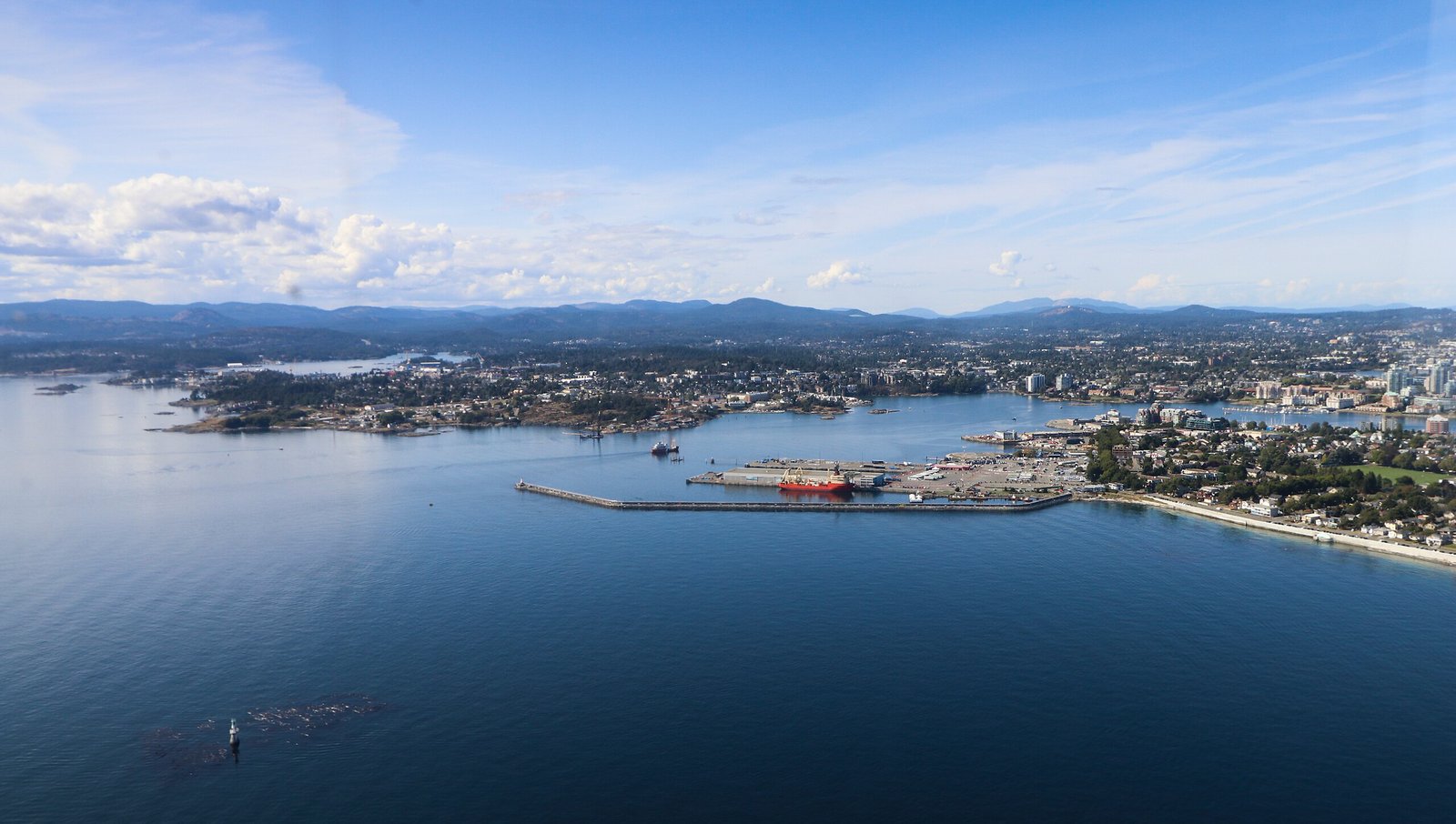
To understand Victoria’s character, we must first look at its position on the map. The city is defined by water and rock, occupying a peninsula at the southern extreme of Vancouver Island, surrounded on three sides by the Salish Sea.
The Pacific Setting and Topography
The location places Victoria at the edge of the continent. Looking south across the Strait of Juan de Fuca, the view is dominated by the Olympic Mountains in Washington State. These snow-capped peaks rise sharply from the water, creating a massive, jagged wall that frames the city skyline. This visual connection to the United States highlights the proximity of the international border.
The terrain itself differs significantly from the dense rainforests often associated with the Pacific Northwest. The region features rocky, undulating landscapes covered in thin soils. This geography supports Garry Oak meadows, a rare ecosystem characterized by gnarly, thick-barked deciduous trees and grassy undergrowth. The shoreline is similarly rugged, consisting of rock outcroppings and small bays rather than long, sandy beaches.
The Climate Advantage
The presence of the Olympic Mountains provides more than just a scenic backdrop; it creates a “rain shadow” effect that dictates the local weather. As moisture-laden systems move in from the Pacific Ocean, they strike the mountains to the southwest and release most of their precipitation before reaching the city. Consequently, Victoria receives significantly less rain than Vancouver or Seattle.
This phenomenon gives the city a sub-Mediterranean climate. It is widely recognized as having the mildest climate in Canada. While much of the country remains under snow and ice, Victoria frequently sees crocuses and daffodils blooming in February. This rain shadow effect allows for a growing season that extends far beyond the national average, influencing everything from local agriculture to the leisurely pace of outdoor life.
History
While the landscape has remained constant, the human story of this land has undergone profound shifts. The narrative of Victoria involves thousands of years of Indigenous stewardship followed by a rapid colonial transformation.
Indigenous Roots and the Lekwungen People
The land upon which the city sits is the traditional territory of the Lekwungen people, known today as the Songhees and Esquimalt Nations. Long before European ships appeared on the horizon, this area served as a thriving center of commerce, culture, and governance. Families maintained Camas bulb fields for food and utilized the cedar-rich forests for housing and transportation.
The Coast Salish culture remains central to the region’s identity. The harbor was never an empty frontier but a sophisticated maritime hub where the Lekwungen people managed resources and trade networks that extended up and down the coast.
The Colonial Era and the Hudson’s Bay Company
The arrival of the Hudson’s Bay Company (HBC) marked the beginning of permanent European settlement. In 1843, the HBC established Fort Victoria as a trading post to secure British interests in the region. For over a decade, it remained a relatively quiet fur trading outpost.
Everything changed in 1858 with the Fraser Canyon Gold Rush. Miners seeking fortune flooded north from California, stopping in Victoria to buy permits and supplies. The population exploded almost overnight, transforming the trading post into a chaotic tent city and commercial center. This influx created immense geopolitical pressure. To prevent American expansionism from creeping north, the British government moved to assert sovereignty formally, establishing the Colony of Vancouver Island.
Development
Let’s look at how those historical origins fueled the city’s modern development. The transition from a resource-dependent outpost to a modern capital required a shift in economic focus.
From Trading Post to Government Town
Once the gold rush subsided and the fur trade declined, Victoria found its stability in administration. When it was named the provincial capital, the economy pivoted toward government services. The public sector became the primary employer, providing a stable economic base that insulated the city from some of the boom-and-bust cycles experienced by industrial towns.
Maritime defense also played a critical role. The establishment of CFB Esquimalt, the home of Canada’s Pacific Naval Fleet, cemented the region’s strategic importance. Today, the provincial government and the naval base remain the two largest economic drivers, influencing the demographics and income levels of the city.
The Modern Economy
In recent decades, the city has diversified beyond government work. The region has seen substantial tech sector growth, earning it the nickname “Tectoria.” This industry now rivals tourism in economic impact, drawing software engineers and entrepreneurs to the island. Tourism, however, remains a massive component of Victoria BC economic development, capitalizing on the city’s heritage and natural beauty.
This growth brings modern urban challenges. Because Victoria is on an island and surrounded by water and other municipalities, physical expansion is limited. This geographic constraint places significant pressure on the housing market, as the demand for living space within the core often outstrips the available land.
Architecture
This history of government and wealth is permanently etched into the city’s skyline. The buildings in the downtown core reflect a deliberate effort to project power and cultural identity.
The British Colonial Aesthetic
The architecture of Victoria is notable for its intentional “Britishness.” City planners and wealthy residents in the late 19th and early 20th centuries favored Victorian and Edwardian styles to reinforce the connection to the Empire. This was not accidental; it was a branding exercise designed to attract British immigrants and investment.
The architect Francis Rattenbury played a definitive role in this era. His designs moved beyond simple functionality to create grand, imposing structures that demanded attention. Rattenbury’s work effectively defined the visual language of the city, using stone, domes, and turrets to convey permanence.
Key Landmarks
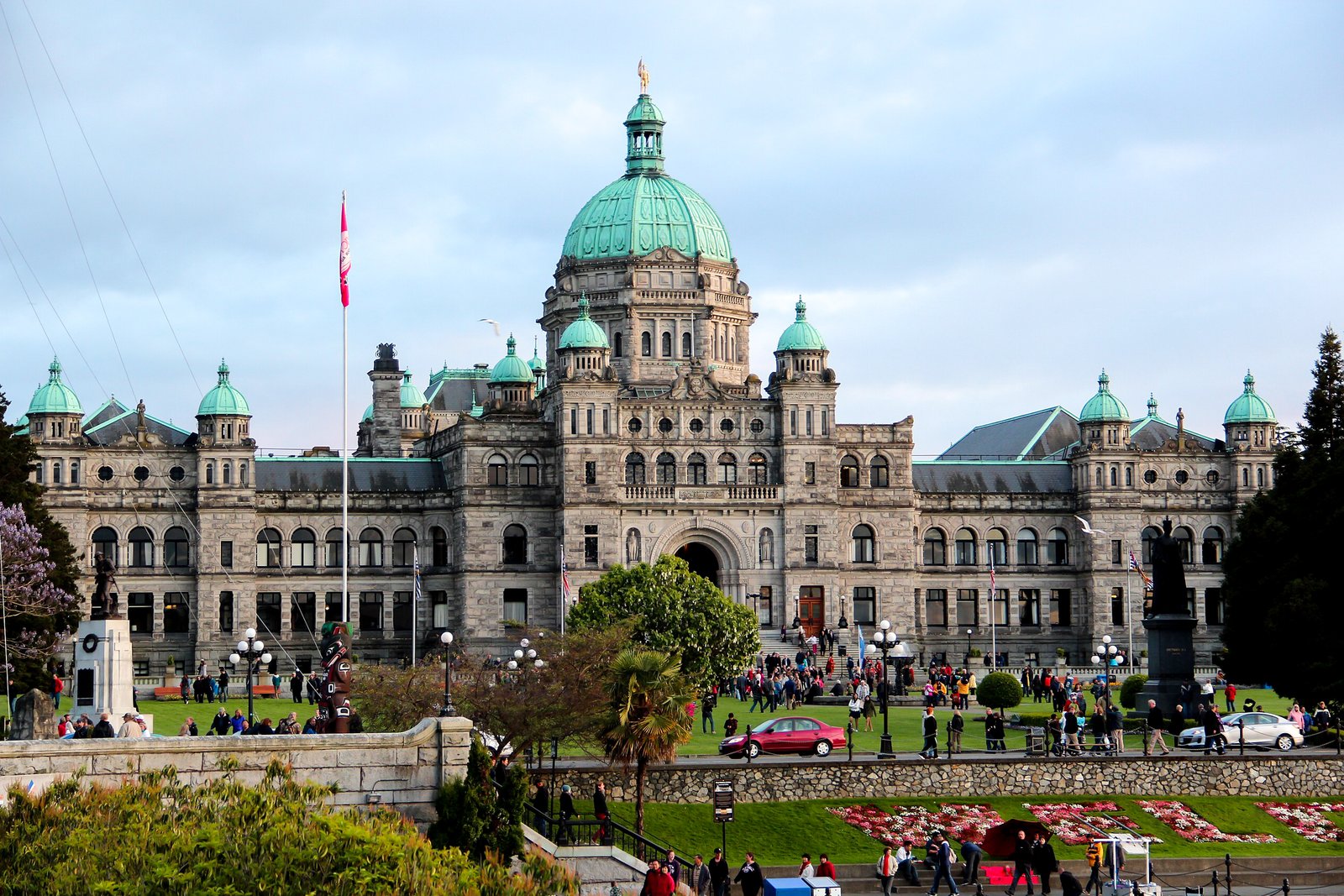
The most prominent example of this aesthetic is the British Columbia Parliament Buildings. Located right on the harbour, these structures feature neo-baroque domes, copper roofing, and a facade of rough-hewn stone. They serve as the seat of the Legislative Assembly and dominate the view for anyone arriving by sea.
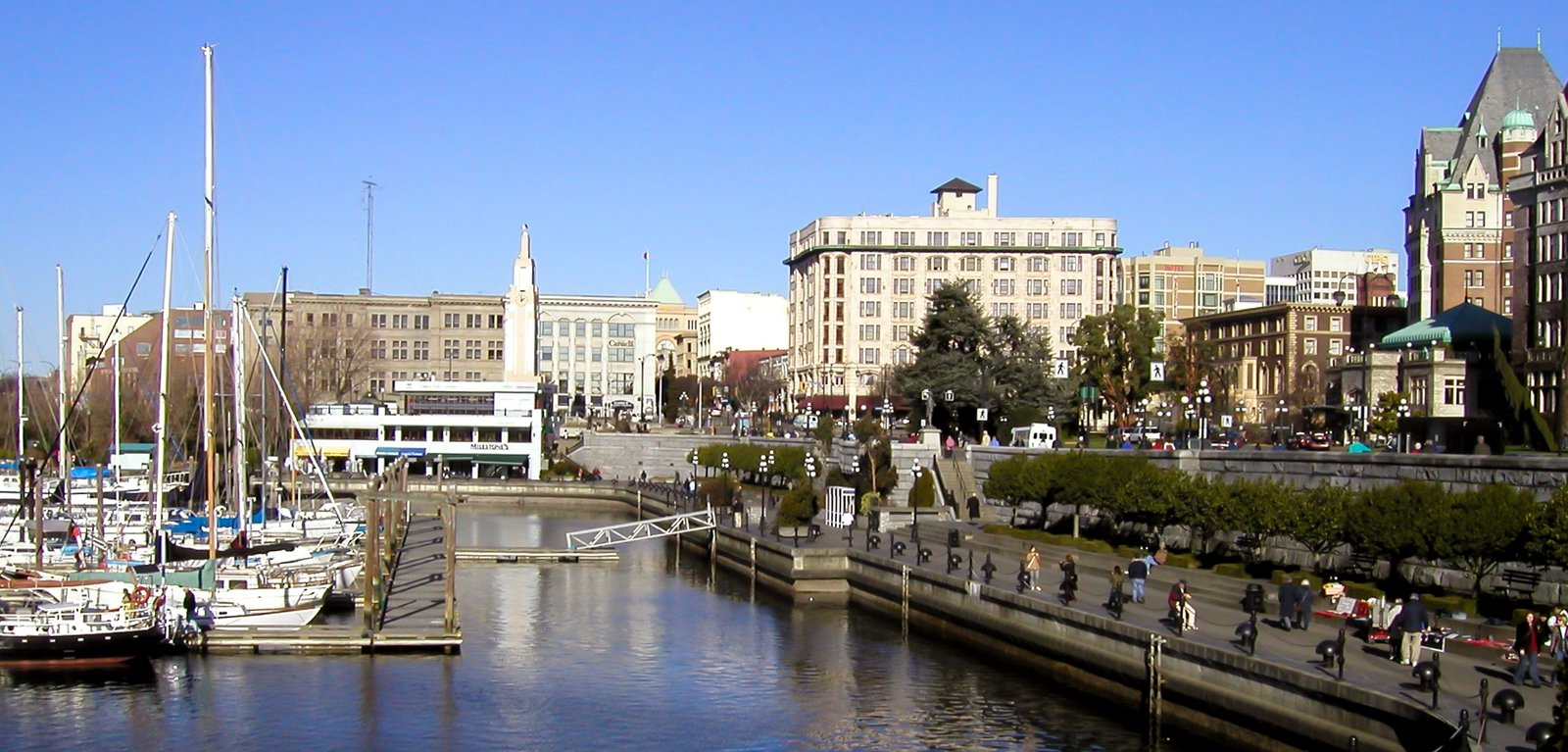
Adjacent to the legislature stands the Fairmont Empress Hotel. Another Rattenbury creation, the Empress is built in a chateau style, famous for its ivy-covered brick walls and steep slate roofs. It commands the Inner Harbour, serving as a symbol of the city’s golden age of tourism. These heritage landmarks stand in juxtaposition to modern condominiums and office towers. However, the city actively preserves its history through districts like Old Town and Chinatown. Notably, Victoria’s Chinatown is the oldest in Canada, characterized by its narrow alleys, like Fan Tan Alley, and distinctive red and gold architectural details.
Visitor Information
If this tour of history and architecture has sparked your interest, here is how you can experience it firsthand. Visiting an island capital requires a bit more logistical planning than driving to a mainland city.
Getting There and Around
Since Victoria is on an island, there are no bridges connecting it to the mainland. Visitors must arrive by air or sea. The BC Ferries service from Vancouver (Tsawwassen terminal) is the most common route, offering a scenic 90-minute crossing through the Gulf Islands. Alternatively, the Victoria Clipper provides high-speed passenger-only ferry service directly from downtown Seattle. For air travel, flights arrive at Victoria International Airport (YYJ).
Once in the city, the downtown core is highly walkable. Most major attractions, hotels, and restaurants cluster around the Inner Harbour, making a car unnecessary for many visitors.
Timing and Attractions
When planning the best time to visit Victoria, consider the seasons. Summer offers the warmest, driest weather, perfect for exploring the beaches and patios. However, the shoulder seasons of spring and fall are excellent alternatives; they offer fewer crowds and the chance to see the famous blooms that give the city its “Garden City” reputation.
For things to do in Victoria BC, several activities are considered essential. Afternoon tea at the Empress Hotel is a tradition that dates back over a century. A visit to The Butchart Gardens, located just outside the city, offers 55 acres of floral displays in a reclaimed quarry. Finally, whale watching tours from the Inner Harbour provide opportunities to see orcas and humpback whales in their natural habitat.
Conclusion
In this article, we’ve looked at the rugged geography, the deep Indigenous and colonial history, and the stunning architecture that makes Victoria unique. The city is a complex overlay of narratives, where ancient Garry Oak meadows meet Edwardian stone, and where the Salish Sea shapes both the climate and the economy.
Victoria constantly balances its identity as a historic “Old English” city with its reality as a modern, Pacific Rim capital. It respects its colonial roots while increasingly acknowledging and celebrating its Indigenous heritage and tech-forward future.
Have you experienced the charm of the Inner Harbour yet? What do you think? Let us know your thoughts.
Further Readings & Resources
For further information, check out the following sources and links:
- Official City of Victoria Website: https://www.victoria.ca
- Tourism Victoria – Official Travel Info: https://www.tourismvictoria.com
- Legislative Assembly of British Columbia – History & Architecture: https://www.leg.bc.ca
- Songhees Nation – Indigenous History: https://www.songheesnation.ca
You may also like
Leave a Reply