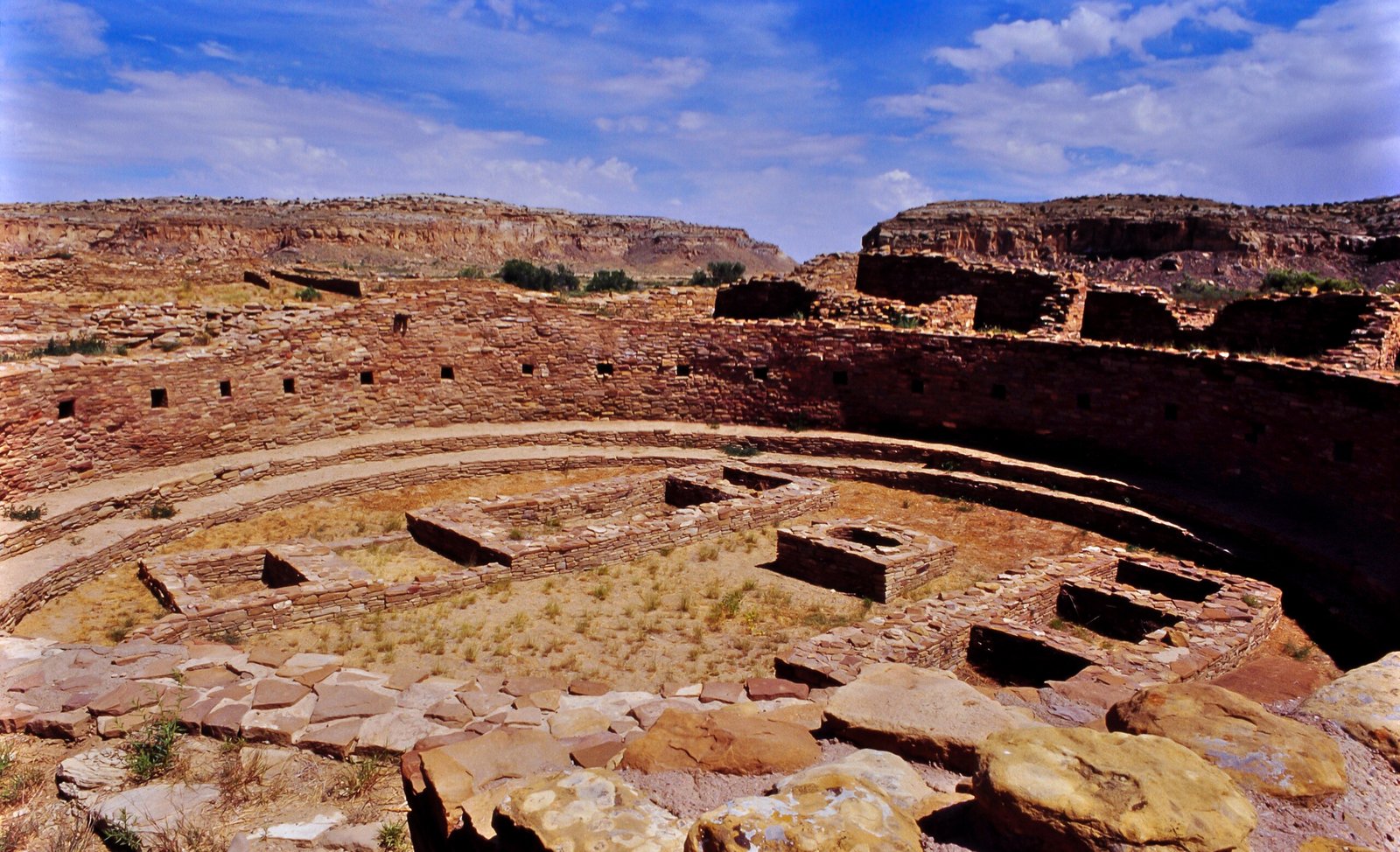
The high-desert wind cuts across the canyon floor, carrying the scent of sagebrush and dry earth. Standing at the rim of a Great Kiva in Chaco Canyon, New Mexico, the scale of the landscape feels overwhelming. The massive stone circle sinks deep into the ground. It offers a stark geometric counterpoint to the rugged sandstone cliffs rising in the distance. This is not merely a ruin. It is a deliberate manipulation of space and stone designed to pull the sky down to the earth.
These structures are kivas. They are subterranean ceremonial chambers used by the Ancestral Puebloans, a group historically referred to as the Anasazi. While smaller kivas were common in household units, the Great Kivas were different. They were not just buildings. They were spiritual vessels connecting the earth and sky. These structures represent a sophisticated intersection of architectural engineering, religious symbolism, and astronomical precision that defined the Chacoan world starting around 900 CE.
In this article, we’ll be exploring the depths of the Great Kivas to understand the engineering and cosmology that made them the center of the Ancestral Puebloan world.
Engineering the Sacred: The Architecture of the Great Kiva
To understand the Great Kiva, you must first grasp its scale. These were not simple pit houses or small family prayer rooms. They were monumental works of public architecture. They required organized labor, advanced planning, and a deep understanding of structural integrity. The builders moved thousands of tons of stone and timber without the use of the wheel or beasts of burden.
The Circular Geometry of Chaco
The most immediate feature of Great Kivas like Casa Rinconada or Chetro Ketl is their perfect circularity. The Ancestral Puebloans constructed massive masonry walls to define these spaces. In many instances, a bench encircled the interior room. This provided seating for massive gatherings. The masonry techniques used here show a high level of expertise. Stones were shaped and fitted with minimal mortar to create smooth, enduring curves.
This circular shape was not arbitrary. It represented a community-centric worldview. The living quarters in Chaco Canyon were typically rectangular room blocks. They were linear and segmented. The kiva was the opposite. It was a continuous loop where no participant was at the head or the foot. This geometry enforced a sense of equality and unity during ceremonies. The architecture itself dictated social cohesion.
Breathing Earth: Ventilation and Fire
Building a massive chamber underground presents a significant problem. You need fire for light and heat, but fire consumes oxygen and produces smoke. Without a way to cycle air, the room would quickly become suffocating.
The Chacoan engineers devised a functional solution. They built intricate ventilation shafts into the walls. These shafts pulled fresh, cold air from the surface down into the chamber. However, a direct draft of cold air would blow directly into the firebox, or hearth, located in the center of the room. This would scatter ash and potentially extinguish the flames.
To solve this, they installed a deflector. This was a vertical stone slab or masonry wall placed between the ventilation opening and the firebox. When the cold air rushed in, it hit the deflector. The air then circulated around the stone and fed the fire gently. As the fire heated the air, smoke rose through the roof entry, pulling more fresh air in behind it.
Ever wondered how they kept the air breathable underground? The solution was pure genius. It allowed hundreds of people to gather around a fire in a subterranean room without suffocating.
Symbols in Stone: Cosmology and Alignment
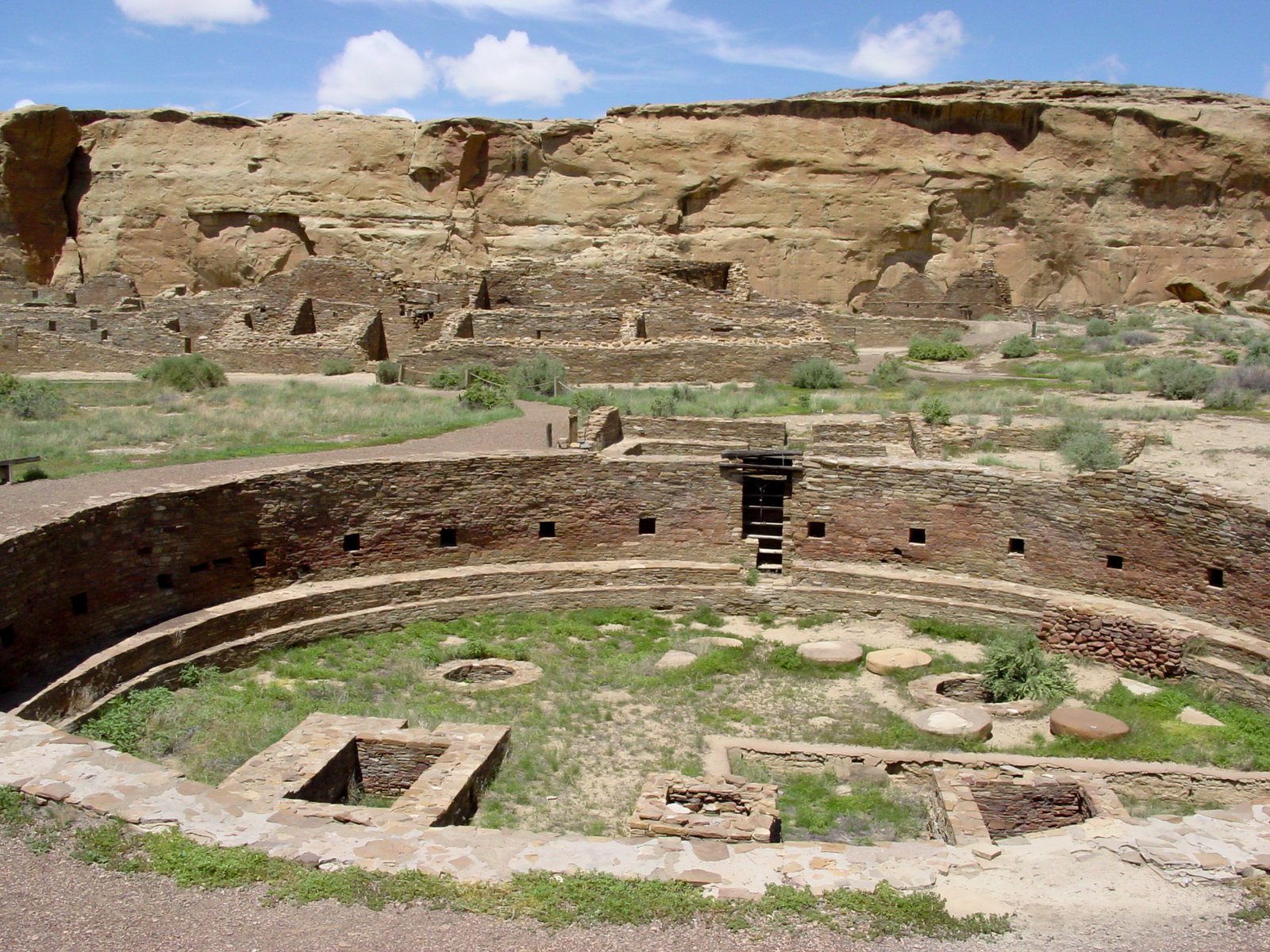
Now that we’ve looked at the engineering, let’s uncover the spiritual mechanics that dictated the placement of every stone. The physical structure was only the container. The features inside turned the kiva into a map of the cosmos.
The Sipapu and the Origins of Life
If you look closely at the floor of a kiva, you will find a small hole or indentation. This is the sipapu. It is perhaps the most profound feature in the entire structure.
In Pueblo cosmology, the sipapu symbolizes the “place of emergence.” It represents the portal through which the ancestors first entered the current world. According to tradition, the people traveled through three previous worlds underground before emerging into this one, the Fourth World. The sipapu is the symbolic umbilical cord that connects the people to the underworld and their origins.
This feature anchors the Ancestral Puebloan spiritual identity to the earth itself. It serves as a constant reminder that human life comes from the earth and will eventually return to it.
Chacoan Astronomy and Celestial Alignments
The construction boom in Chaco Canyon around 900 CE coincided with a period of intense astronomical observation. The Great Kivas were not placed randomly. They were oriented to track the movement of the sun and stars.
Casa Rinconada serves as a prime example. The structure contains niches in the walls that align with specific solar events. During the summer solstice sunrise, a beam of light enters a window and aligns with a specific niche. This suggests the Great Kiva acted as both a calendar and a compass. It aligned the community with the movement of the heavens. It told the people when to plant, when to harvest, and when to perform ceremonies.
How did they achieve such precision 1,000 years ago? They did so through generations of careful observation and the translation of those observations into monumental stone architecture.
Conclusion
In this article, we’ve journeyed through the depths of the Chacoan Great Kivas. We examined the sophisticated ventilation systems and circular masonry that made these subterranean chambers habitable and communal. We also explored the spiritual mechanics of the space, from the sipapu that connects to the underworld to the solar alignments that track the heavens.
The Chacoan civilization eventually depopulated the canyon, but the form of the kiva did not vanish. It remains central to the spiritual life of modern Pueblo peoples in New Mexico today. The fire still burns, and the connection between earth and sky endures.
Further Readings & Resources
For further information, check out the following sources and links:
- UNESCO World Heritage Centre: Official listing and description of the Chaco Culture, detailing the universal value of the architecture. https://whc.unesco.org/en/list/353/
- National Park Service (NPS): Official overview of Chaco Culture National Historical Park, including details on Great Kivas and Casa Rinconada. https://www.nps.gov/chcu/learn/historyculture/places.htm
- National Park Service (NPS) – Archaeoastronomy: A specific breakdown of the astronomical alignments found within Chaco Canyon structures. https://www.nps.gov/chcu/learn/historyculture/archaeology.htm
You may also like
Leave a Reply