Imagine standing on the median of Central Parkway in Cincinnati today. Traffic rushes past, and the noise of the city surrounds you. Now, transport yourself back to the 1850s. The asphalt disappears. In its place flows the Miami and Erie Canal, a waterway crowded with barges and lined with industrious activity. Across that water lies a dense, bustling neighborhood echoing with the sounds of German dialects and the smell of roasting malt.
This is Over-the-Rhine (OTR). It is not merely a historic neighborhood; it is a time capsule of 19th-century urban America. While many cities have modernized their way out of their history, Cincinnati has managed to preserve a district that tells the story of immigrant ambition and industrial prowess.
OTR represents the finest example of Italianate architecture and German heritage in the United States. Its significance lies in its density and its survival, marking it as a critical piece of national history. Ever wondered where the American brewing industry truly began? The answer lies deep in the cellars and brick tenements of this distinct neighborhood.
In this article, we’re going to explore the bricks, the brews, and the resilience of this unique district. Let’s dive in.
Crossing the Canal: The Origins of the Name
To understand Over-the-Rhine, you must first understand the geography that defined it. The Miami and Erie Canal was the commercial artery of early Cincinnati, connecting the Ohio River to Lake Erie. This body of water (now paved over as Central Parkway) served as a physical boundary. It separated the established downtown business district from the rapidly expanding immigrant neighborhood to the north.
The name “Over-the-Rhine” began as a bit of local folklore and lighthearted humor. In the mid-19th century, the area north of the canal was home to a massive influx of German immigrants. Men working in downtown Cincinnati would cross the bridges over the canal to return home after their shifts. As they crossed the water to a place where they heard their native tongue, ate German food, and drank lager, they likened the experience to crossing the Rhine River in Germany. The nickname stuck, eventually becoming the official designation for the area.
The population density during this era was staggering. At its peak, Over-the-Rhine was one of the most densely populated areas in the United States, rivaling the tenements of New York City. Thousands of families lived in concise, multi-story brick buildings, creating a tight-knit community where work, life, and leisure were intertwined within a few square miles.
As these immigrants settled in, they didn’t just build homes; they built a masterpiece of masonry.
A Brick Masterpiece: The Architecture
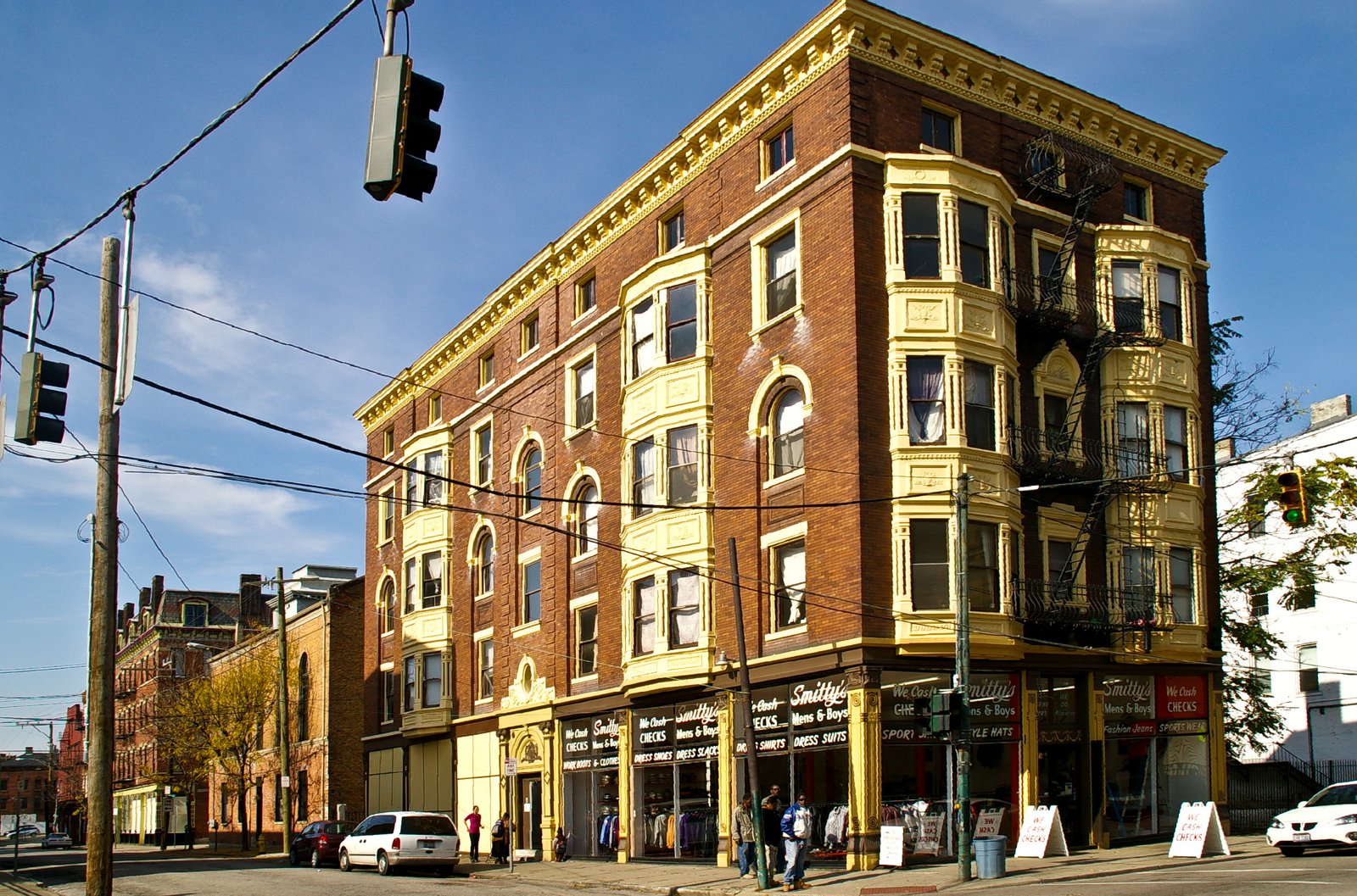
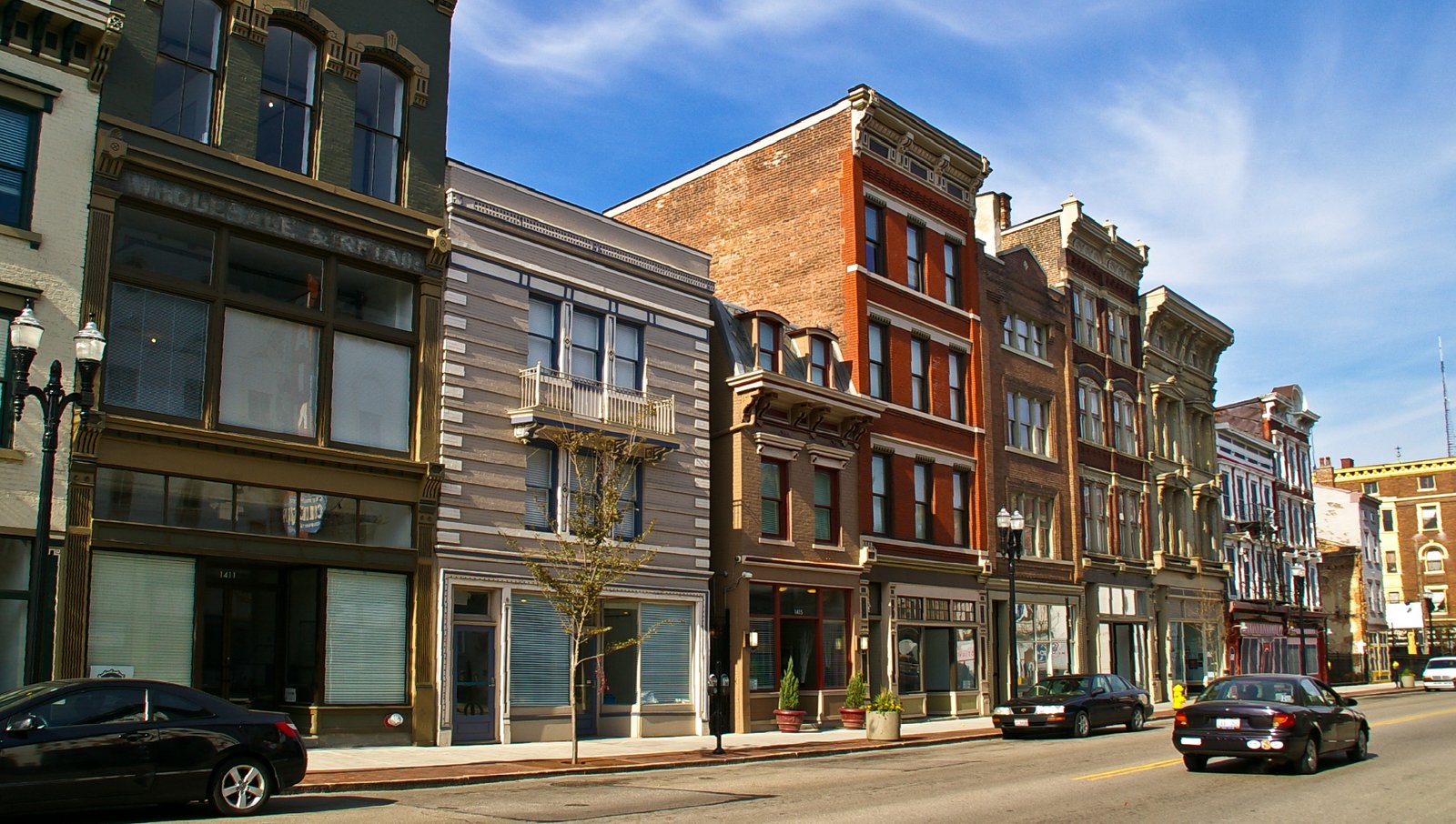
Walking through OTR today offers a masterclass in urban design. The neighborhood is renowned for its collection of 19th-century Italianate architecture and Greek Revival styles. Unlike other historic districts that may feature wood-framed houses, OTR is a canyon of brick.
The streetscape is visually commanding. When you look up, you see ornate cornices (the decorative molding at the roofline) that were often mass-produced in local factories. The windows are tall and narrow, frequently capped with rounded arches or stone lintels.
For those unfamiliar with architectural terms, the “Italianate” style is distinct and easy to spot. Inspired by the villas of Italy, this style emphasizes verticality. It features tall windows, low-pitched roofs, and decorative brackets under the eaves. It was a popular style during Cincinnati’s boom years, resulting in a cohesive look that spans block after block.
Architects and historians often compare this collection favorably to the French Quarter in New Orleans or historic Charleston. It is widely believed to be the largest intact urban historic district in the United States. The continuity of the design creates a unique sense of place that few other American cities possess.
While the buildings are beautiful, what happened underneath and inside them was equally important to the city’s economy.
The Beer Barons and Brewing Heritage
Cincinnati was once a brewing powerhouse, and Over-the-Rhine was its engine room. By the late 1800s, the city produced massive quantities of beer, much of it consumed locally by the very people who brewed it. This era gave rise to “Beer Barons,” wealthy industrialists like Christian Moerlein, who operated breweries that shipped beer around the world.
A critical component of this success lay underground. Before the invention of mechanical refrigeration, brewers needed a way to keep their lager cool while it fermented. The solution was geology. Brewers dug a massive network of underground tunnels and lagering cellars deep into the hillsides of OTR. These sub-basements provided the consistent, cool temperatures required for lagering beer, allowing production to continue year-round.
The culture of consumption was different then. The “saloon” culture of the pre-Prohibition era was not about dark, seed bars. Instead, beer gardens were family-centric community hubs. Families would gather on weekends to listen to music, eat, and socialize. It was a lifestyle centered on community connection rather than just alcohol consumption.
If you are interested in Cincinnati brewing history or exploring historic breweries, OTR remains the focal point of that legacy. Many of the original brewery structures still stand, and some of the tunnels remain accessible.
But the flow of lager (and the neighborhood’s prosperity) came to a screeching halt with the arrival of the 20th century’s biggest buzzkill: Prohibition.
Decline, Preservation, and Challenges
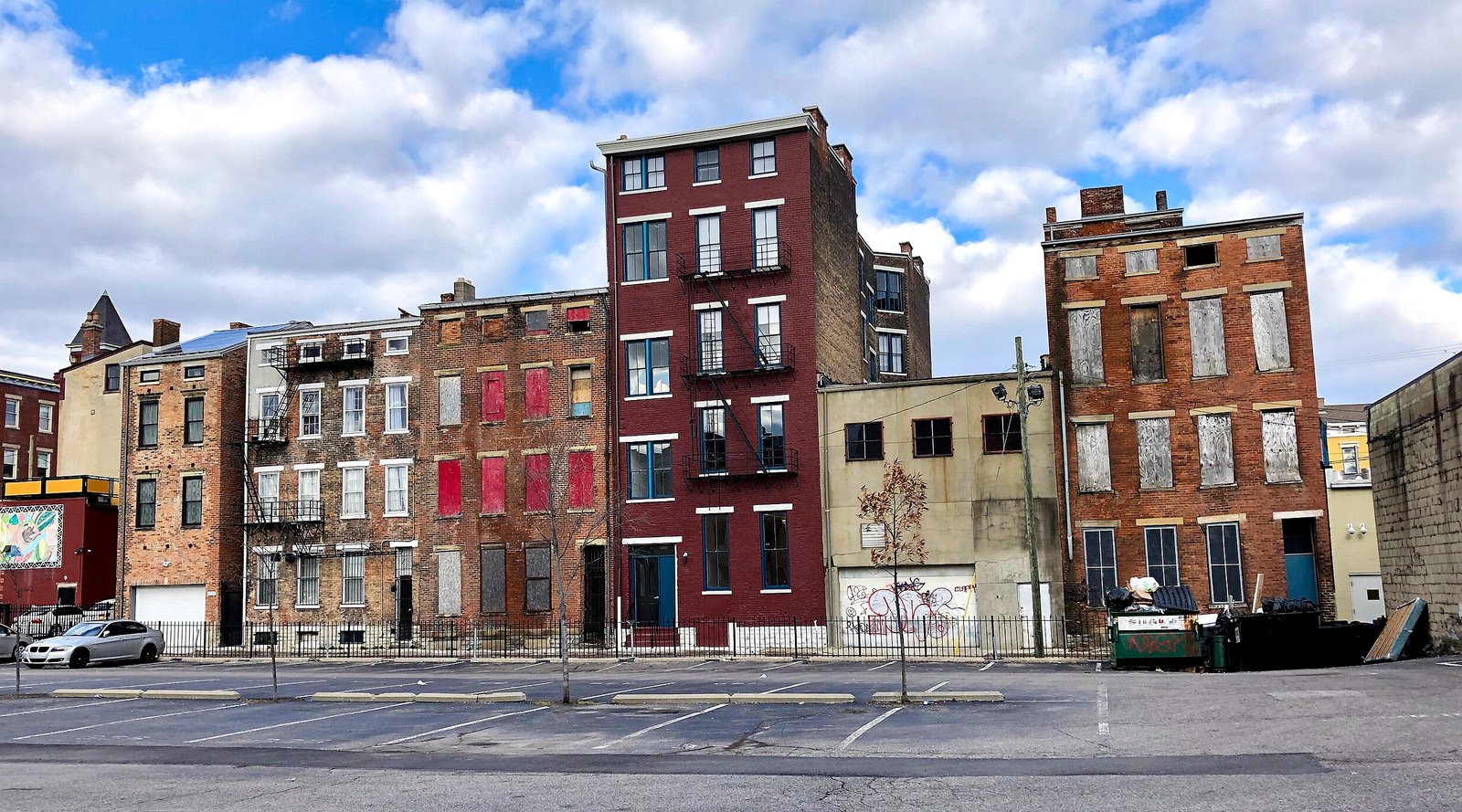
The decline of Over-the-Rhine was not caused by a single event but by a convergence of historical forces. World War I brought with it intense anti-German sentiment. The celebration of German heritage became a liability, and street names were changed to sound more American. Shortly after, Prohibition crushed the local economy. Breweries closed, jobs evaporated, and the social fabric of the neighborhood unraveled.
By the mid-20th century, suburban flight drew residents away from the urban core. The dense brick tenements fell into disrepair, and the neighborhood struggled with poverty and neglect for decades.
The turning point for OTR came with the recognition of its architectural value. The listing of the neighborhood on the National Register of Historic Places provided a framework for protection. Preservationists fought to save the buildings from demolition, arguing that the loss of such a district would be a cultural tragedy.
However, modern revitalization is complex. While the restoration of these Italianate buildings is visually stunning and has brought investment back to the city, it presents significant challenges. The renovation of historic properties often leads to higher property values, which raises questions about gentrification and housing affordability. The current state of OTR represents a delicate balance (attempting to save history and encourage economic growth) while trying to maintain a community for residents of all income levels.
Despite these challenges, the dust has settled to reveal a neighborhood that is once again teeming with life.
Modern OTR: A Cultural Renaissance
Today, Over-the-Rhine has transformed into a premier destination for locals and travelers alike. The revitalization is anchored by several key institutions and attractions that highlight the best of Over-the-Rhine tourism.
Findlay Market
No visit to OTR is complete without a stop at Findlay Market. It is Ohio’s oldest continuously operated public market. Located at the northern edge of the district, the market is a sensory explosion of fresh produce, meats, cheeses, and local crafts. It serves as the beating heart of the neighborhood, bringing together long-time residents and new visitors in a shared space.
Parks and Arts
The renovation of Washington Park has provided the neighborhood with a spectacular civic “front lawn.” Facing the park is the Cincinnati Music Hall, a Venetian Gothic structure that houses the city’s symphony, opera, and ballet. This proximity of green space and high art creates a vibrant cultural corridor.
The Visitor Experience
The atmosphere in modern OTR is energetic. The streets are lined with trendy restaurants, boutique shops, and craft breweries that pay homage to the area’s history. Walking tours are a popular way to see the district, allowing visitors to appreciate the architecture up close.
| Attraction Type | Highlight | Why Visit? |
| Civic Space | Washington Park | Features a splash park, dog park, and frequent live events. |
| Shopping/Food | Findlay Market | Experience local vendors and historic market culture. |
| Architecture | Music Hall | A stunning example of Victorian Gothic design. |
| Brewing | Brewery Tunnels | Explore the underground history of beer making. |
If you are looking for things to do in Cincinnati, spending a day wandering these brick-lined streets is essential.
Conclusion
The story of Over-the-Rhine is a narrative of survival. It began as a crowded enclave for German immigrants seeking a new life, endured decades of neglect and economic hardship, and has emerged as a celebrated historic gem.
OTR is more than just a collection of pretty buildings. It is a testament to the durability of immigrant culture and the lasting value of human-scale urban design. The brick tenements that once housed laborers are now highly sought-after addresses, proving that quality craftsmanship maintains its value across centuries.
Have you walked the streets of OTR or explored the brewing tunnels? What do you think? Let us know your thoughts!
Further Readings & Resources
For further information, check out the following sources and links:
- Brewing Heritage Trail: A non-profit dedicated to preserving and sharing the history of Cincinnati brewing. https://brewingheritagetrail.org
- Over-the-Rhine Chamber of Commerce: Official source for business, events, and community news in the district. https://www.otrchamber.com
- Findlay Market: Official site for Ohio’s oldest continuously operated public market. https://www.findlaymarket.org
You may also like
Leave a Reply