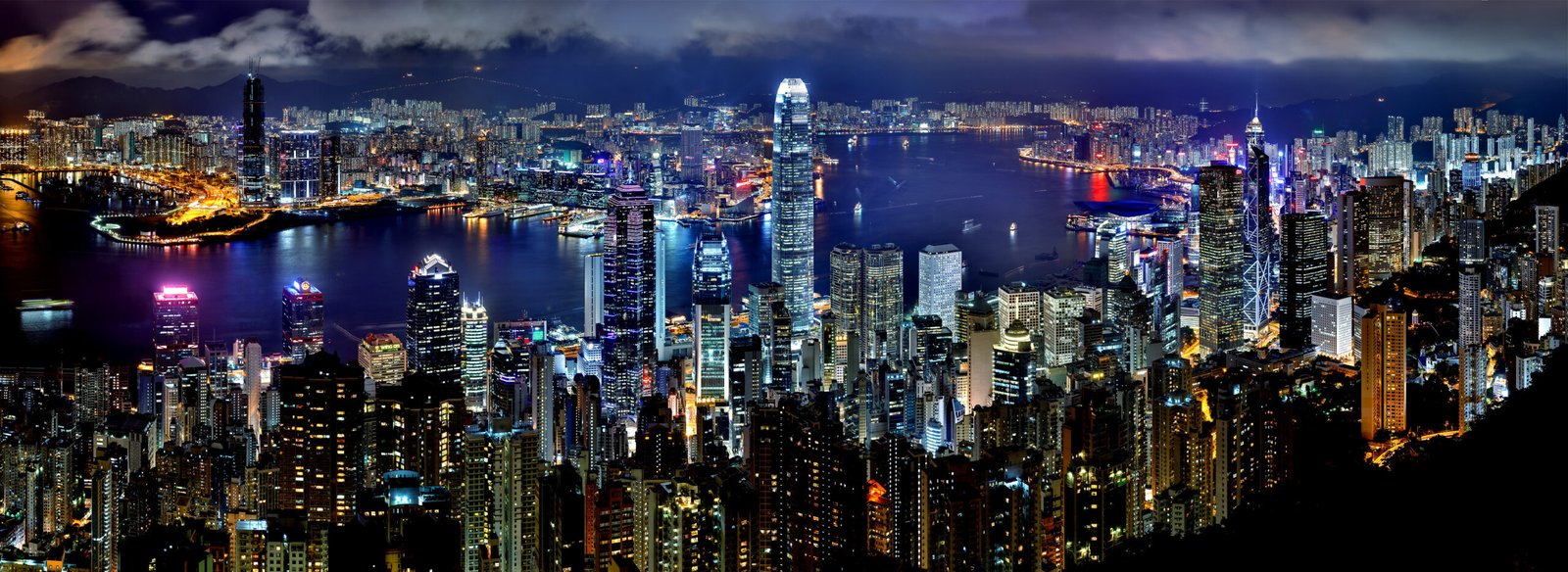
The air on Hollywood Road is thick with a story. Here, the sweet, heavy scent of sandalwood incense, wafting from the open doors of a 19th-century temple, mingles with the faint, electric hum of a thousand air conditioners stacked stories high in the glass towers above.
This is the sensory signature of Hong Kong: a place where the past isn’t a museum piece behind velvet ropes, but a living, breathing participant in the city’s relentless rush toward the future. It’s a city defined by a constant, visible, and often beautiful dialogue between what was and what will be.
This conversation is etched into every facet of its identity. It’s in the architectural clash of Taoist temples and banking headquarters, in the surprisingly ancient methods used to construct modern marvels, and in the historic transport systems that remain the lifeblood of this global metropolis. Above all, it’s in the unique vertical geography that has squeezed these opposing forces together, forging a way of life found nowhere else on Earth.
In this article, we’ll peel back the layers of this incredible metropolis to understand how its colonial past and futuristic ambitions coexist on every street corner. Let’s dive in.
The Skyline’s Dialogue: Where Temples Meet Towers
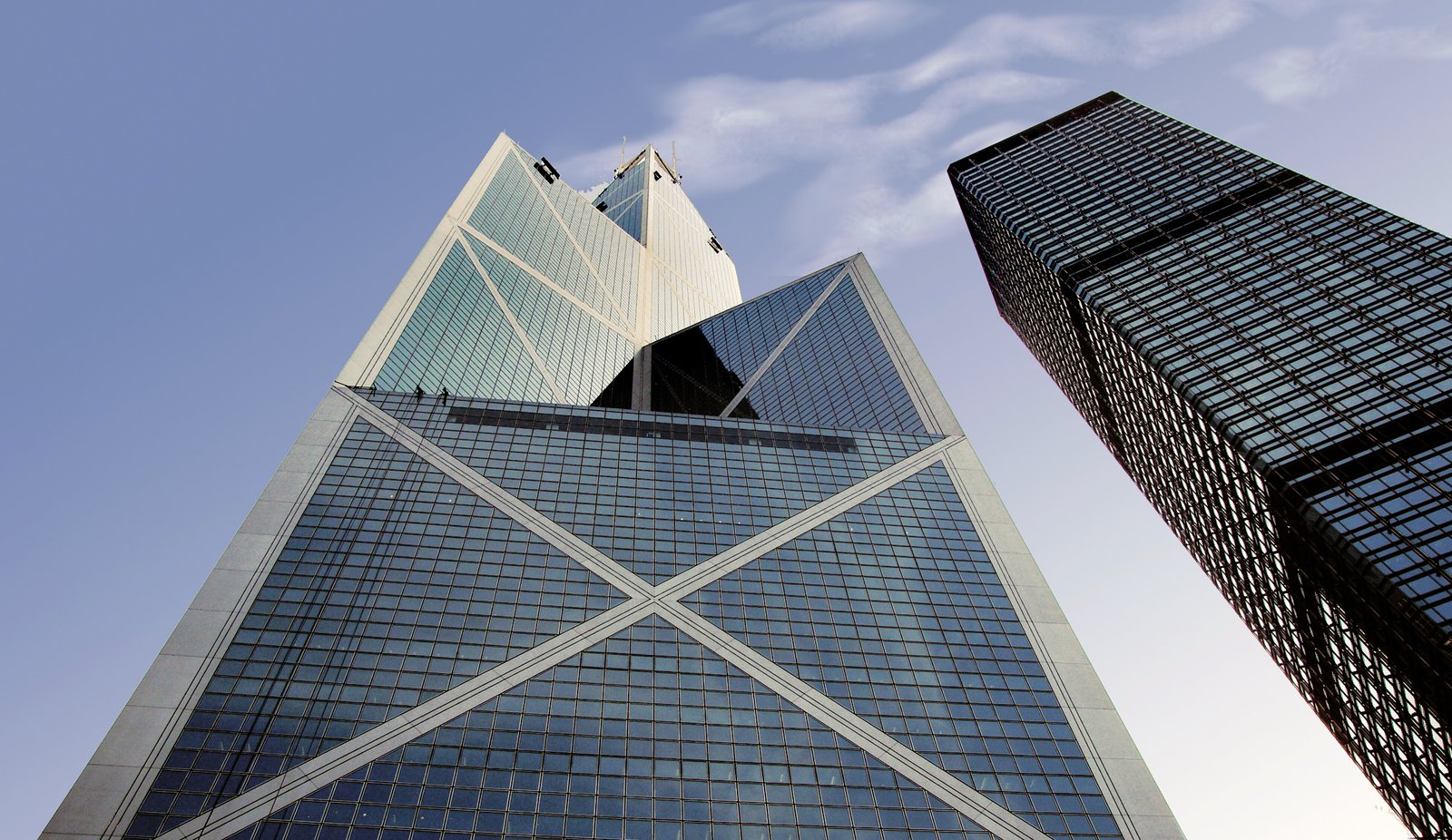
Nowhere is Hong Kong’s dual identity more striking than in its skyline, a dramatic conversation between glass, steel, and carved wood. It’s a landscape where Feng Shui masters have as much influence as structural engineers, and where the most futuristic buildings are often wrapped in one of the world’s oldest construction materials.
Echoes of the Past: The Serenity of Man Mo Temple
To understand this dialogue, you must first step out of the chaotic flow of Sheung Wan’s streets and into the quiet reverence of Man Mo Temple. The transition is immediate and profound. The city’s relentless noise fades, replaced by a hushed calm. Your eyes adjust to the dim light, which filters through a haze of smoke from enormous, slow-burning incense coils hanging from the ceiling like golden chandeliers. Each coil, representing a devotee’s prayer, can burn for weeks, filling the space with an ancient, sacred aroma.
Built in 1847, during the early years of British colonial rule, the temple is a spiritual anchor dedicated to the gods of Literature (Man Cheong) and War (Mo Tai). Students still come here to pray for luck in their exams, while others seek guidance or offer thanks.
The architecture itself is a lesson in tradition. Intricate wooden carvings depict ancient myths, while the green-tiled roof, adorned with ceramic figurines, stands in stark defiance of the concrete and glass that now surrounds it. To be inside Man Mo Temple is to feel the persistent heartbeat of traditional Chinese culture, a spiritual oasis preserved against the odds in one of the world’s most expensive real estate markets.
The Glass and Steel Jungle of Central
Just a short walk from the temple’s calming incense, a different kind of power dominates the landscape: the towering skyscrapers of Central, Hong Kong’s financial district. This is the city’s global face, a man-made canyon of architectural ambition. Two buildings, in particular, tell the story of modern Hong Kong.
The first is the HSBC Main Building, an architectural marvel by Norman Foster completed in 1985. With its modular design and exposed structural elements, it looked like something from the future. Crucially, its ground floor is completely open, allowing positive energy, or qi, to flow from the mountains down to the water, a key consideration of Feng Shui.
Looming nearby is its rival, the Bank of China Tower, designed by I.M. Pei. A stunning geometric sculpture of glass and aluminum, its sharp, angular design was seen by many Feng Shui practitioners as aggressive, its knife-like edges “cutting” the good fortune of its neighbors. Today, local urban legend dictates that HSBC’s cannon-like maintenance cranes act as a defense system, symbolically aimed at the Bank of China Tower to deflect its negative energy.
This architectural duel, fought with principles of ancient mysticism, perfectly encapsulates Hong Kong’s hybrid identity. These buildings aren’t just office blocks but monuments to commerce, power, and deeply ingrained cultural beliefs.
Weaving the Future: The Ancient Art of Bamboo Scaffolding
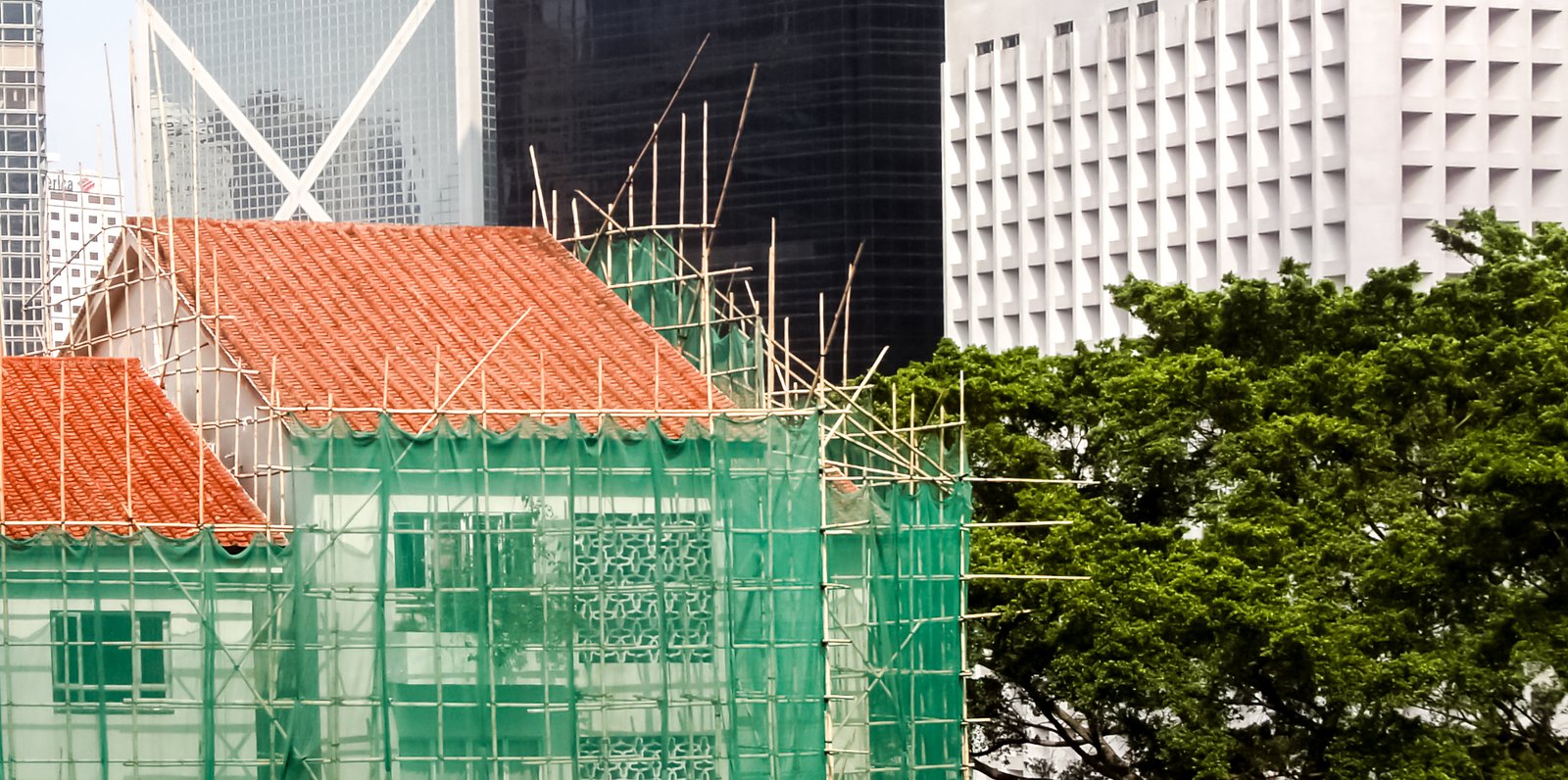
But how are these futuristic giants built and maintained in one of the world’s most crowded urban environments? The answer is surprisingly low-tech and ancient. Look closely at any new skyscraper rising into the clouds or an older building getting a facelift, and you’ll likely see it encased in a dense, web-like cocoon of bamboo.
This is bamboo scaffolding, a construction technique that has been used in this part of the world for centuries. In a city obsessed with modernity, it remains the preferred method for its sheer practicality. Skilled tradesmen, known as sifu or “spiders,” scale dizzying heights, lashing together bamboo poles with simple nylon ties. They work with incredible speed and precision, creating a strong, flexible, and lightweight structure that can be erected and dismantled far more quickly and cheaply than its steel counterpart.
It’s also uniquely adaptable, able to hug the contours of Hong Kong’s often irregularly shaped buildings. The sight of this organic, traditional material wrapped around a gleaming tower of glass and steel is perhaps the most potent visual metaphor for Hong Kong itself: a city that uses the wisdom of its past to build its future.
Arteries of the Metropolis: A Journey on Iconic Transport
If the architecture tells the story of Hong Kong’s identity, its transportation systems are the arteries that carry its lifeblood, connecting its past to its present. In a place constantly reinventing itself, the most cherished ways of getting around are living relics, offering a ride through history itself.
Crossing the Harbour, Crossing Eras: The Legendary Star Ferry
The journey across Victoria Harbour on a Star Ferry is one of the world’s great urban experiences. For just a few Hong Kong dollars, you can board the iconic green-and-white vessel and travel between the Kowloon peninsula and Hong Kong Island. It’s a trip that has been made since 1888, with the Star Ferry company officially taking the helm a decade later. You can still feel the gentle thrum of the diesel engine, hear the satisfying clank of the gangplank, and sit on the polished, reversible wooden benches.
But the true magic is the view. As the ferry chugs across the water, the entire, breathtaking skyline unfolds before you. From the water, the sheer scale and density of the city become overwhelmingly clear. You see the modern architectural icons of Central standing shoulder-to-shoulder, with the lush, green peak rising dramatically behind them.
The ten-minute journey is a moment of reflection, a pause in the city’s frantic pace. It’s used by everyone—commuters in suits, tourists with cameras, families on an outing. The Star Ferry is a floating piece of heritage that binds the two halves of the city together.
The “Ding Ding”: A Ride Through History on the Hong Kong Tram
Back on Hong Kong Island, another historic mode of transport offers a completely different perspective of the city’s vibrant street life. These are the narrow, double-decker trams, known affectionately to every local as the “Ding Ding” for the distinctive double-ring bell used by drivers to clear their path. Running since 1904, this is the only tram system in the world operated exclusively with double-decker cars, and it’s a rolling museum.
To get the best experience, head to the top deck, grab a seat at the front, and watch the city scroll by like a film. The tram moves at a leisurely pace, forcing you to slow down and observe the details you’d otherwise miss. The route cuts through the island’s oldest and most dynamic districts. You’ll glide past the traditional medicine shops and dried seafood stores of Sheung Wan, through the gleaming financial hub of Central, into the neon-lit entertainment district of Wan Chai, and finally into the shopping mecca of Causeway Bay. It’s a ground-level, intimate tour of Hong Kong life, all for a flat fare that makes it one of the most affordable and charming ways to explore the city.
Living Vertically: How Geography Forges a Unique Way of Life
All of these elements—the packed-in skyscrapers and the historic transport lines—are a direct response to one inescapable fact: Hong Kong’s dramatic and restrictive geography. The city’s unique blend of culture and architecture was not just a choice; it was a necessity, born from the challenge of fitting millions of people onto a tiny sliver of habitable land.
Up, Not Out: The Genesis of the Vertical City
Hong Kong is a territory of steep, volcanic mountains and scattered islands. Only about 25% of its land is developed, and a fraction of that is flat. Faced with a booming population and nowhere to expand horizontally, the city had only one direction to go: up. This geographical constraint is the single most important factor in understanding daily life here. It has created one of the most vertical and densely populated urban environments on the planet.
This verticality is woven into the fabric of life. It’s common for a single building to contain a subway station in its basement, multiple floors of shopping malls, a dozen floors of offices, and a hotel or residential apartments on top. People live, work, and socialize in stacked environments, connected by a dizzying network of elevators, escalators, and elevated pedestrian walkways that allow you to traverse entire districts without ever touching the ground. This upward trajectory is a testament to human ingenuity in the face of natural limits.
A Commute in the Sky: The Mid-Levels Escalator
There is no better symbol of Hong Kong’s adaptation to its vertical terrain than the Central–Mid-Levels Escalator. It’s the longest outdoor covered escalator system in the world. Stretching over 800 meters and climbing 135 meters up the steep hillside, it’s a public transport system, a commuter artery, and a social hub all in one.
Each morning, the system runs downhill to carry residents from the fashionable Mid-Levels district down to the subway stations and offices of Central. From mid-morning until midnight, it reverses direction, carrying people back uphill. But its function goes far beyond a simple commute. The walkway has become a destination in its own right, a vibrant corridor lined with trendy restaurants, hidden bars, art galleries, and boutique shops. It’s a piece of urban infrastructure born of pure necessity that has evolved into one of the city’s most unique and lively public spaces, perfectly illustrating how Hong Kong solves its geographical puzzles with creative, human-scaled solutions.
Conclusion
In the end, Hong Kong reveals itself not as a city of contradictions, but of remarkable integration. It’s a place where the past is not bulldozed for the future but is instead woven into its very fabric. This seamless blend of old and new, of Eastern tradition and Western influence is at the core of the city’s identity, the source of its resilience, and the engine of its constant, captivating evolution.
Further Readings & Resources
For further information, check out the following sources and links:
- Hong Kong Tourism Board (Discover Hong Kong): Official guide to the city’s attractions, including cultural heritage sites like Man Mo Temple. https://www.discoverhongkong.com/
- The Star Ferry Company, Limited: Official website with history, fares, and timetable for the iconic harbor crossing. https://www.starferry.com.hk/en/home
- Hong Kong Tramways, Limited: Learn about the history and routes of the famous “Ding Ding” trams. https://www.hktramways.com/
- CNN Style article on Bamboo Scaffolding: An in-depth look at the masters who build Hong Kong’s traditional scaffolding. https://www.cnn.com/2025/09/09/style/hong-kong-bamboo-scaffolding-hnk-intl-dst
- Hong Kong Heritage Museum: A resource for understanding the broader cultural and historical context of the region. https://www.heritagemuseum.gov.hk/en/homepage.html
You may also like
Leave a Reply