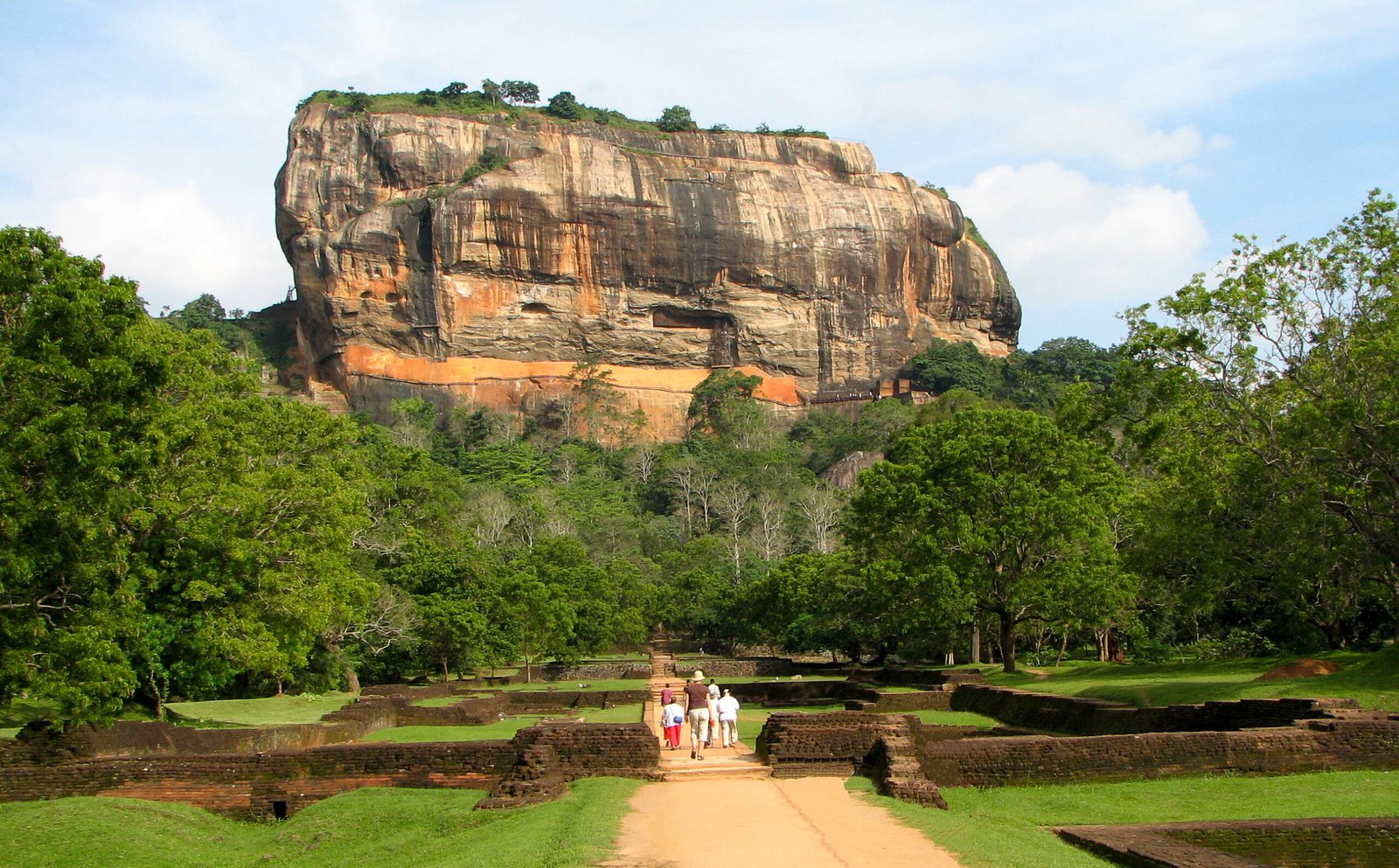
A colossal column of rock juts out nearly 200 meters (660 feet) from the flat, green plains of central Sri Lanka. This is Sigiriya, a geological marvel that served as the foundation for one of history’s most ambitious and dramatic royal capitals. More than just a striking landmark, this ancient fortress is a breathtaking combination of natural wonder and human ingenuity.
On its flat summit lie the ruins of a palace, at its base spread sophisticated gardens, on its sheer cliffs hide exquisite art, and guarding the final ascent are the remains of a monumental gateway that gives the site its name: Lion Rock.
In this article, we’ll explore the fusion of nature, ambition, and artistry that defines the ancient marvel of Sigiriya.
The Granite Foundation: A Geological Powerhouse
To truly understand the fortress of Sigiriya, you first have to understand the rock itself. It is, essentially, the main character in this story, a silent protagonist that dictated every aspect of the kingdom built upon it.
The Making of a Monolith
Sigiriya’s dramatic form is the result of millions of years of geology at work. It is a hardened magma plug, the dense core of a long-extinct and long-eroded volcano. You can imagine a massive volcano slowly being worn away by wind and rain over eons, with only its toughest, most resilient throat of solidified magma remaining. That is Sigiriya. This geological process left behind an imposing monolith with steep, almost vertical sides and a flat plateau at its summit. This made it a perfect natural fortress, seemingly designed by nature for defense.
A Strategic Choice
In the 5th century AD, this geological masterpiece caught the eye of King Kasyapa. According to the ancient Sri Lankan chronicle, the Culavamsa, Kasyapa seized the throne by entombing his father, King Dhatusena, alive and driving his half-brother and rightful heir, Moggallana, into exile in India. Consumed by paranoia and fearing his brother’s inevitable return for revenge, Kasyapa abandoned the traditional capital of Anuradhapura and sought an impregnable refuge.
He found it in Sigiriya, a site that had already served as a quiet Buddhist monastery for centuries. The rock’s commanding 360-degree view of the surrounding plains meant no army could approach undetected. Its sheer cliffs made a conventional assault nearly impossible. For a usurper king, the rock was the ultimate stronghold, a place where he could build a new capital that was both a fortress and a statement of his power.
An Engineering and Artistic Masterpiece
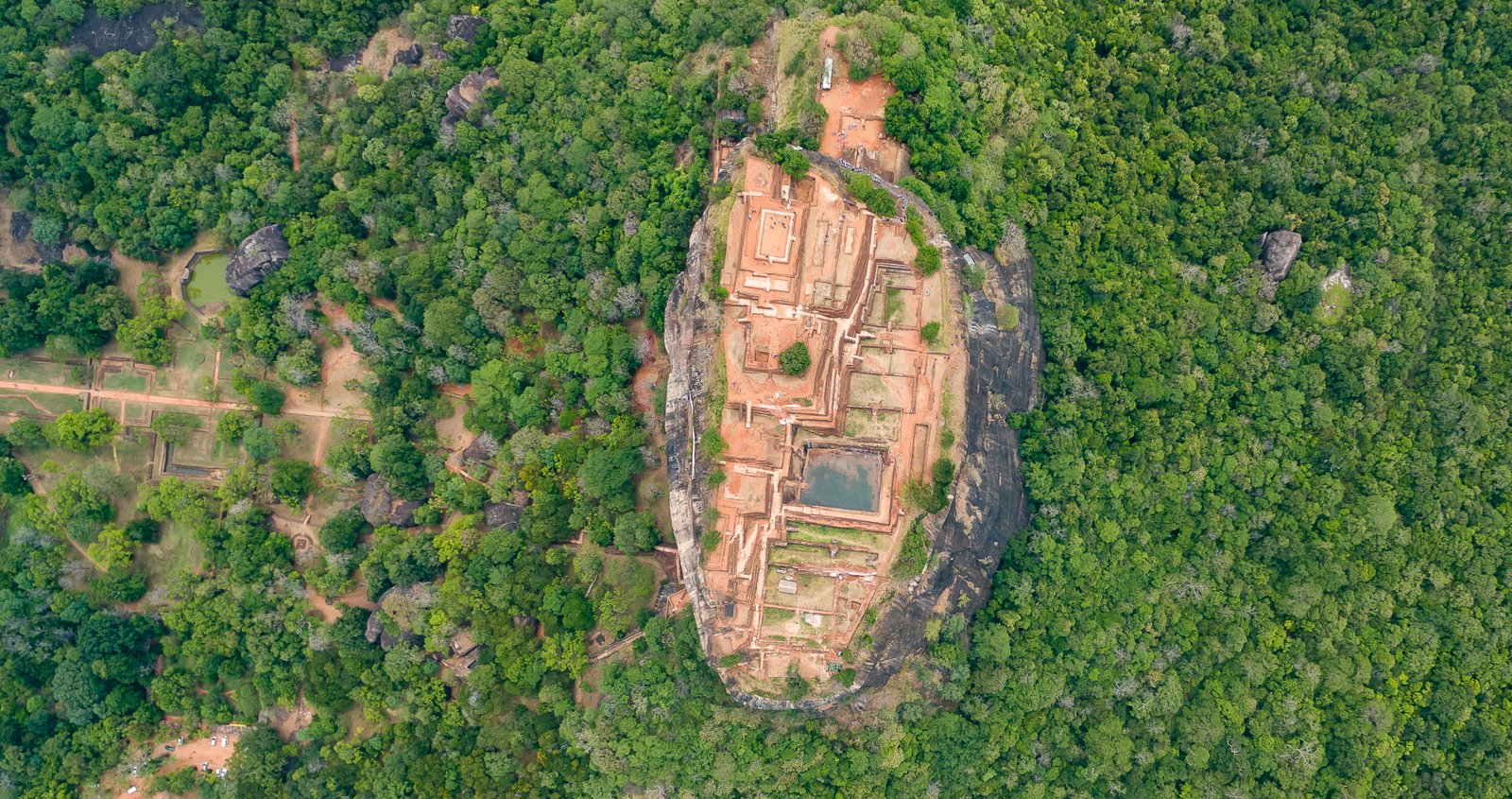
Far more than a natural stronghold, Sigiriya is a showcase of some of the most advanced urban planning and hydraulic engineering of the ancient world. The city Kasyapa built was a complex, integrated design that blended seamlessly with the natural landscape.
The Water Gardens: A Hydraulic Wonder
Sprawling from the base of the rock is an extensive complex of gardens, considered one of the oldest landscaped gardens in the world. This meticulously planned area consists of three distinct but interconnected parts: the symmetrical water gardens, the organic cave and boulder gardens, and the terraced gardens that climb the lower slopes of the rock.
The water gardens are the most stunning feature. They are a marvel of ancient hydraulic engineering, a network of canals, locks, lakes, fountains, and serpentine streams. This system was so sophisticated that it relied on a combination of gravity and underground pressure conduits to move water throughout the gardens. During the rainy season, more than 1,500 years after they were built, some of the fountains still work, bubbling up from the ground to the astonishment of modern engineers.
The Ascent and the Lion’s Gate
The journey to the summit is a masterclass in ancient architecture. A series of staircases—some cut directly into the rock, others constructed from brick and timber—wind their way up the formidable cliff face. Halfway up, travelers pass the Mirror Wall. This was once a brick parapet wall so highly polished with a special plaster that the king could supposedly see his reflection as he walked past. Over the centuries, visitors left their impressions in the form of poetry and prose, known as the “Sigiri graffiti.” These writings, dating from the 8th to the 10th centuries, are now invaluable historical records, offering insights into the lives and thoughts of some of Sigiriya’s earliest tourists.
Further up, on a plateau on the northern side of the rock, lies the feature that gives Sigiriya its name. Here, two massive lion paws, intricately carved from the natural rock, flank the base of the final staircase. These are all that remain of a colossal lion, built from brick and plaster, through whose open mouth visitors would have made their final, awe-inspiring ascent to the palace. The lion was a powerful symbol of royal authority, and passing through it would have been an intimidating and unforgettable experience.
The Palace in the Sky
At the very top of the rock, on the 1.6-hectare plateau, Kasyapa built his palace. Today, only the foundations remain, but they reveal a complex layout of buildings, audience halls, and cisterns carved into the rock to collect precious rainwater. Archeologists believe the upper palace was a luxurious complex of pavilions and chambers, while the lower levels were service quarters and guard posts. From this vantage point, Kasyapa had an unparalleled view of his kingdom. It’s easy to imagine the palace in its heyday, a stunning residence with lush gardens and shimmering pools, seemingly floating in the sky above the jungle canopy.
The Art of the Ancients: The Sigiriya Frescoes
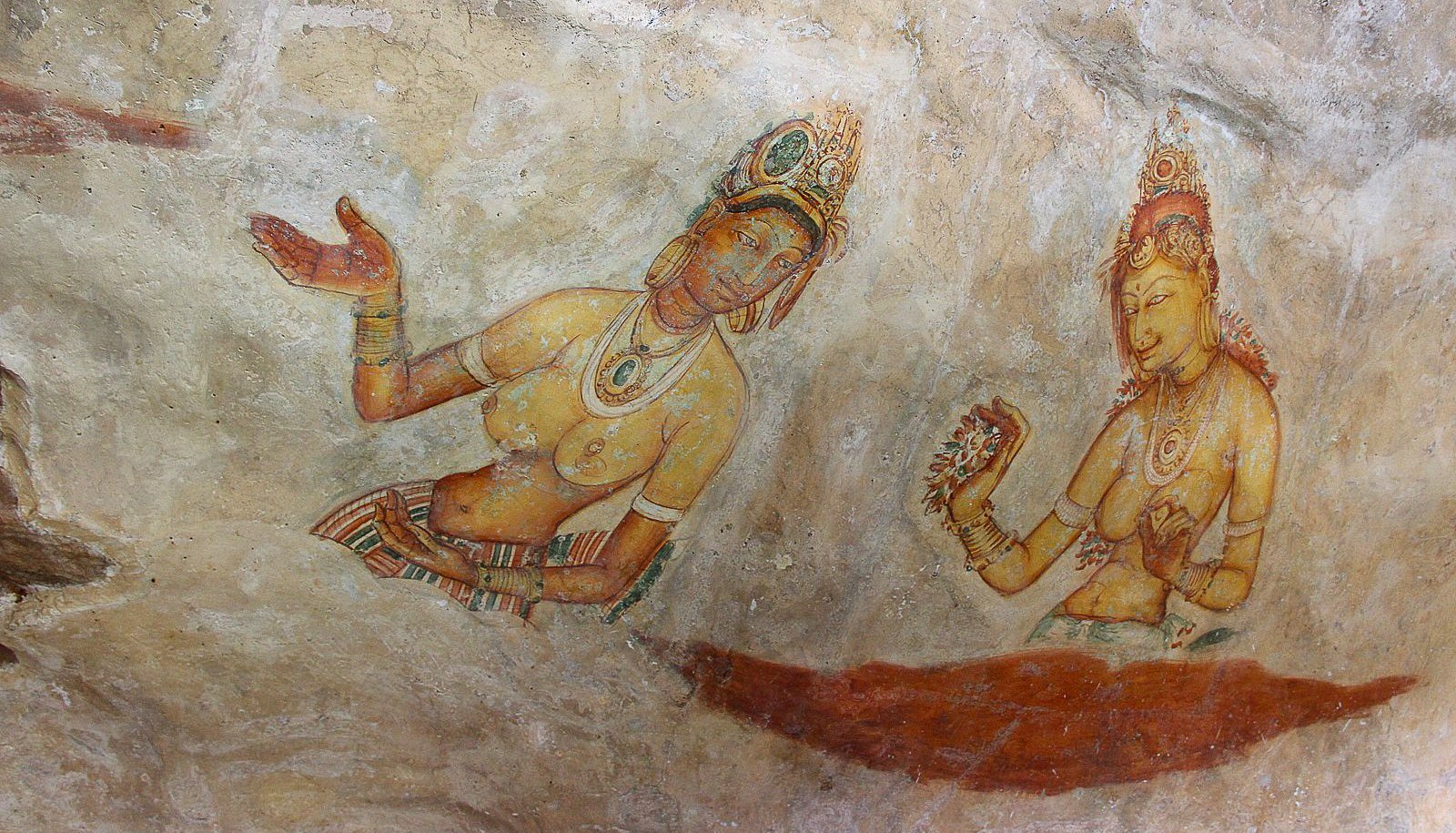
While the engineering of Sigiriya is astounding, its art provides a glimpse into the soul of the kingdom. The most celebrated artistic treasures are the world-famous Sigiriya frescoes, found on the western face of the rock.
The “Cloud Maidens”
Painted in a sheltered pocket of the rock, protected from the elements, is a gallery of breathtaking frescoes. They depict beautiful, ethereal female figures, often bare-chested and adorned with intricate jewelry and flowers. Popularly known as the “Cloud Maidens” or Apsaras (celestial nymphs), their identities remain a captivating mystery. Are they portraits of Kasyapa’s queens and concubines? Are they celestial beings showering flowers upon the earth below? Or are they participants in a religious ritual?
The art itself is remarkable. The figures are painted with vibrant colors and delicate, confident brushstrokes, displaying a mastery of form and expression that was unparalleled in its time. Their serene and graceful expressions have captivated viewers for centuries, making them the most iconic images of ancient Sri Lankan art.
A Lost Gallery
What we see today—around 21 figures—is only a small fragment of a much larger artistic endeavor that survived centuries of weathering and a devastating vandalism incident in 1967 (In a devastating event, vandals gained access to the highly protected fresco pocket, hacked away at several panels, and threw green industrial paint over the maidens).
Historical texts, including the graffiti on the Mirror Wall, suggest that the entire western face of the rock was once a gigantic picture gallery. It may have been covered in hundreds of these painted figures, creating a truly spectacular sight for those approaching the fortress.
Rather than using wet plaster, the artists used an early form of oil emulsion tempera, applying pigments mixed with plant gums and drying oils to a dry plaster surface. Despite lacking the chemical bonding of true frescoes, this resilient technique made the paintings incredibly durable. It is thanks to this technique, and the sheltered location, that these masterpieces have survived for over 1,500 years.
Conclusion
From its volcanic origins to the sky palace on its summit, Sigiriya is a multi-layered marvel. It is a unique testament to the synergy between a dramatic natural landscape and extraordinary human creativity. The fortress tells a story of fear, ambition, and a king’s desire to build a heavenly kingdom on earth, before it was ultimately returned to the Buddhist monks after Kasyapa’s fall. Its designation as a UNESCO World Heritage site underscores its importance not just to Sri Lanka, but to all of humanity.
Today, the Lion Rock stands as a silent but powerful chronicle of a short-lived kingdom and the timeless human desire to build, create, and leave a mark on the world.
Further Readings & Resources
For further information, check out the following sources and links:
- Sri Lanka Department of Archaeology Entry for Sigiriya: https://archaeology.gov.lk/index.php/sigiriya
You may also like

Leave a Reply